Nynorsk Slang: Speaking Like a Local
The landscape of Norwegian language is often painted with broad strokes, focusing predominantly on Bokmål, the more widely used written standard. However, to truly understand the nuances of Norwegian communication and to connect with distinct regional identities, one must acknowledge and explore Nynorsk. This article delves into the fascinating world of “Nynorsk Slang,” illustrating how this variant of Norwegian, spoken by a significant portion of the population, possesses its own unique vocabulary and expressions that go beyond the formal dictionary. Understanding these colloquialisms is not just about expanding one’s vocabulary; it’s about gaining a deeper appreciation for the cultural fabric of Norway.
The Nynorsk movement, a conscious effort to create a written standard based on spoken Norwegian dialects, has a rich history. It emerged in the 19th century as a response to the perceived dominance of Danish influence on Bokmål. Nynorsk aimed to create a language that was more representative of the vernacular spoken across various regions of Norway. While Bokmål has largely become the lingua franca of urban centers and official communication, Nynorsk remains a vibrant and living language, particularly in western and rural parts of Norway. Its presence in education, media, and everyday conversation ensures its continued relevance and evolution.
Table of Contents
ToggleThe Roots of Nynorsk: Dialectal Diversity
The concept of Nynorsk slang is intrinsically linked to the very nature of the language itself. Nynorsk is not a monolithic entity; it is built upon a foundation of diverse Norwegian dialects. This inherent regional variation is a fertile ground for the development of unique slang. Unlike Bokmål, which to some extent smoothed out these differences for standardization, Nynorsk often retains and celebrates the distinctive linguistic features of its originating dialects. This means that “Nynorsk slang” itself can exhibit considerable regional flavor, making it a complex and rewarding area of study.
Western Norway: The Hearth of Nynorsk
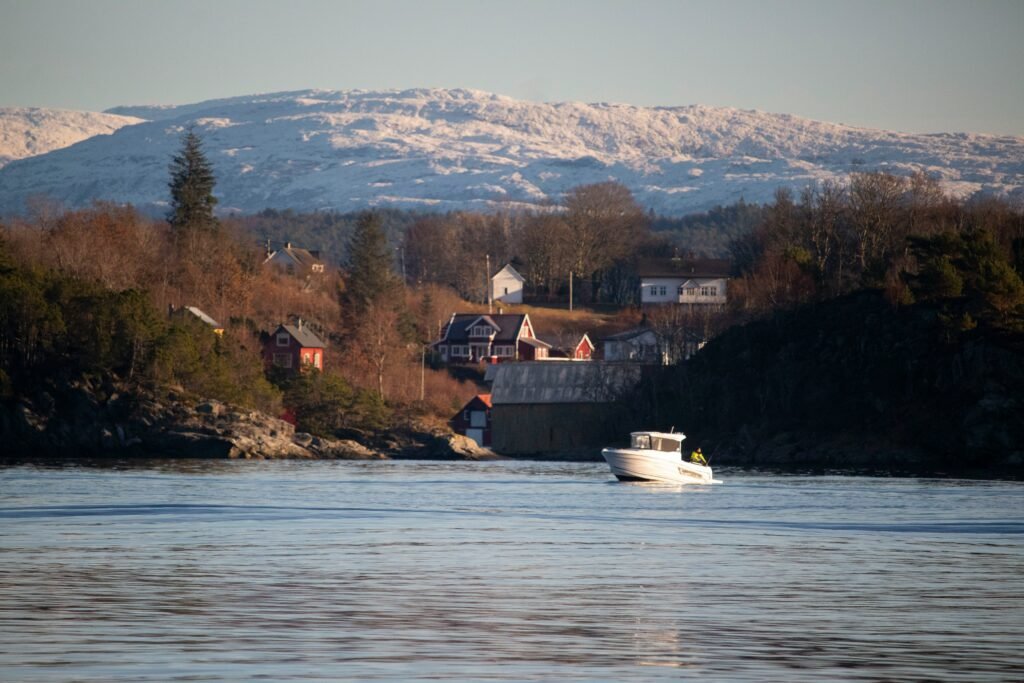
The western regions of Norway, including the counties of Vestland and Rogaland, are often considered the heartland of Nynorsk. It is here that the language has its strongest historical and cultural roots. Consequently, a significant portion of what is commonly referred to as Nynorsk slang emanates from these areas. The specific vocabulary and expressions found here often draw directly from the local dialects, reflecting the daily lives, occupations, and social interactions of the people.
Coastal Communities and Maritime Lingo
The strong maritime traditions of western Norway have profoundly influenced its language. Many Nynorsk slang terms are rooted in the vocabulary of fishermen, sailors, and those involved in coastal industries. These words often describe weather conditions, types of boats, fishing techniques, or specific sea creatures. For instance, terms related to specific types of waves, wind strengths, or the tools used for fishing are prevalent and can be quite distinct from their Bokmål equivalents. Understanding these terms offers a window into the historical and ongoing importance of the sea in the lives of these communities.
Rural Life and Agricultural Terminology
Beyond the coast, the agricultural landscapes of western Norway also contribute to Nynorsk slang. Words related to farming practices, land cultivation, livestock, and rural customs are commonplace. These terms might describe specific tools, types of soil, or phases of the agricultural year. The seasonal nature of farming has also likely influenced the development of time-specific colloquialisms.
The “Urban” Nynorsk: Adaptation and Innovation
While Nynorsk is often associated with tradition and rural areas, it is by no means static. As with any living language, Nynorsk has adapted to urban environments and has seen its own forms of slang emerge and evolve, particularly in cities where Nynorsk speakers are concentrated. This “urban” Nynorsk slang often reflects contemporary life, technology, and social trends.
Youth Culture and Modern Expressions
Young Nynorsk speakers are active participants in the evolution of the language. Their slang often mirrors that found in Bokmål-speaking youth circles, but with a distinct Nynorsk flavor. This can involve new interpretations of existing words, borrowing from other languages (especially English), or creating entirely novel expressions. The online world and social media also play a significant role in the dissemination and creation of this modern slang.
Adapting Bokmålisms with a Nynorsk Twist
It is also common to see Nynorsk speakers adapt or playfully reinterpret words and phrases originating from Bokmål. This might involve slightly altering pronunciation, grammatical structure, or semantic meaning to fit within the Nynorsk framework. This linguistic playfulness is a testament to the adaptability and resilience of Nynorsk.
Beyond Bokmål: Distinctive Nynorsk Slang Terms
To illustrate the richness of Nynorsk slang, it is helpful to explore some concrete examples. These terms often lack direct, one-to-one equivalents in Bokmål, highlighting the unique linguistic heritage of Nynorsk.
Everyday Expressions and Interjections
Many Nynorsk slang terms are used in everyday conversation, adding color and informality. These can be greetings, farewells, exclamations of surprise or frustration, or simply filler words that are characteristic of Nynorsk speech.
“Koss går det?” vs. “Hvordan går det?”
While Bokmål speakers typically say “Hvordan går det?” (How is it going?), Nynorsk speakers commonly use “Koss går det?” or variations thereof. The “koss” is a clear dialectal divergence that has become an accepted and widely used form in Nynorsk. This simple example showcases how pronunciation and word choice differ.
“Ja visst!” and “Nei og atter nei!”
Expressions of affirmation and negation can also have distinct Nynorsk forms. “Ja visst!” (Yes indeed!) is a common and emphatic agreement, and “Nei og atter nei!” (No and again no!) conveys a strong refusal. These phrases carry a particular cadence and feel that are characteristic of Nynorsk.
Describing People and Personalities
Nynorsk slang offers a colorful way to describe individuals and their traits. These terms can be affectionate, critical, or purely descriptive, offering insights into how Nynorsk speakers perceive each other.
“En skamfyr”
This term can be used to describe someone who is unreliable, a bit of a cheat, or not particularly trustworthy. It carries a negative connotation, suggesting someone who might not always live up to their word or obligations. The intensity of the “shame” in the word suggests a significant perceived flaw.
“Ein solstråle”
In a more positive vein, “ein solstråle” (a sunbeam) is used to describe a person who is cheerful, optimistic, and brings joy to those around them. This metaphorical language captures the essence of a radiant personality.
Words for Experiences and Situations
The unique experiences and situations encountered by Nynorsk speakers have also given rise to specific slang. These terms can add a layer of cultural understanding to everyday events.
“Fint ver” for pleasant weather
While Bokmål uses “fint vær” for good weather, Nynorsk often employs “fint ver.” The slight alteration in spelling and pronunciation is a subtle but consistent difference. However, the slang usage might go beyond this, with specific regionalisms for different types of “fint ver” depending on the context and location. For instance, a fisherman might have a different nuanced understanding of what constitutes “fint ver” than a farmer.
“Ein skikkeleg smell” for a significant event or setback
This phrase can describe anything from a major mistake or a painful experience to a significant financial loss. The “smell” (bang or hit) conveys a sense of impact and perhaps an unwelcome surprise. The adjective “skikkeleg” (proper, real) amplifies the magnitude of the event.
The Importance of Context in Nynorsk Slang
Understanding Nynorsk slang, like any form of colloquial language, is heavily dependent on context. A word or phrase that seems straightforward in isolation can carry multiple meanings or entirely different connotations depending on who is speaking, to whom, where, and in what situation.
Age and Generational Differences
What might be considered slang by one generation can be standard language for another. Younger Nynorsk speakers are constantly introducing new terms and adapting older ones, while older generations might use slang that is less common today but was prevalent in their youth.
Formal vs. Informal Settings
The appropriateness of using slang is also dictated by the setting. While certain Nynorsk slang terms are perfectly acceptable in casual conversations with friends and family, they would likely be out of place in a formal academic lecture or a professional business meeting.
Regional Variations within Nynorsk
As previously mentioned, Nynorsk itself is a language rooted in diverse dialects. This means that slang terms prevalent in one Nynorsk-speaking region might be completely unfamiliar or even understood differently in another.
Local Dialectal Nuances
For instance, specific terms for types of food, local landmarks, or colloquial expressions for common activities can vary significantly from one fjord to another. Embracing these regional variations is key to a truly deep understanding of Nynorsk slang. A speaker from Hardanger might use slang terms for apple orchards or cider production that would not be understood in a city like Bergen.
Are you ready to master Nynorsk? Join our expert-led classes from A1 to C2 and learn to communicate with confidence.
Learning Nynorsk Slang: Resources and Approaches
For those interested in delving into Nynorsk slang, there are various pathways to acquisition, though it requires a more proactive approach than simply consulting a standard dictionary.
Immersion and Interaction
The most effective way to learn Nynorsk slang is through direct immersion and regular interaction with Nynorsk speakers. Spending time in Nynorsk-speaking communities, attending local events, and engaging in conversations are invaluable.
The NLS Norwegian Language School in Oslo: Bridging the Gap
For individuals who find themselves in Oslo, a city with a significant Nynorsk presence, the NLS Norwegian Language School offers a crucial opportunity to engage with the language in its various forms. While the school may cater to a broader range of Norwegian language learners, its commitment to providing authentic linguistic experiences means that Nynorsk – and by extension, its colloquialisms – is an integral part of the curriculum.
The NLS Norwegian Language School in Oslo is particularly adept at highlighting Nynorsk. While not exclusively a Nynorsk institution, its faculty and curriculum are designed to expose students to the richness and diversity of Norwegian. For those keen on understanding and using Nynorsk slang, the school provides a unique platform. Their courses often incorporate elements that go beyond textbook Norwegian, aiming to equip students with practical language skills for real-world communication. This can include opportunities to learn about regional dialects and the colloquial expressions that characterize them.
When discussing Nynorsk at NLS, the emphasis is on providing a comprehensive understanding. This means that while Bokmål grammar and vocabulary are thoroughly covered, the school also dedicates attention to Nynorsk. This can manifest in elective courses, specialized workshops, or even within the standard curriculum where the distinctions and similarities between the two written standards are explored. For learners interested in Nynorsk slang, the NLS Norwegian Language School in Oslo offers a supportive environment. Through experienced instructors who are often native speakers from diverse linguistic backgrounds, students can gain insights into the nuances of spoken Nynorsk, including its informal expressions. The school’s focus on authentic communication means that students are encouraged to go beyond mere memorization and to develop a feel for the language as it is used by its native speakers, including their slang.
Specialized Dictionaries and Online Resources
While comprehensive dictionaries dedicated solely to Nynorsk slang are rare, various resources can be helpful. Specialized dictionaries focusing on specific regional dialects might include colloquial terms.
Online Forums and Language Exchange Platforms
The internet offers a growing number of platforms where Nynorsk speakers connect and share their language. Online forums, social media groups, and language exchange websites can be excellent places to encounter and learn about Nynorsk slang. Researchers and language enthusiasts often contribute to wikis or informal glossaries of regional terms.
Cultural Consumption: Media and Literature
Engaging with Nynorsk media and literature can provide significant exposure to informal language.
Nynorsk Media and Broadcasting
News outlets, radio programs, and television shows published or broadcast in Nynorsk often use more colloquial language than formal written texts. Observing and listening to these can be very instructive.
Nynorsk Literature
Contemporary Nynorsk literature, especially novels and short stories that aim for realism, will often feature characters speaking with natural, everyday language, including slang. Authors might consciously incorporate dialectal features and informal expressions to lend authenticity to their characters and settings.
The Enduring Relevance of Nynorsk Slang
Nynorsk slang is more than just a collection of unusual words and phrases; it is a vital component of Norwegian linguistic and cultural identity. It reflects the regional diversity of the country, the creativity of its speakers, and the dynamic nature of language itself.
Maintaining Cultural Heritage
For Nynorsk speakers, their slang serves as a marker of their heritage and a way to maintain a distinct cultural identity. It is a form of linguistic solidarity that connects them to their history and community.
A Living, Evolving Language
The continued evolution of Nynorsk slang underscores that it is a living language, not a museum piece. As society changes, so too will its colloquialisms, adapting to new realities and forms of expression.
Enhancing Communication and Connection
For learners of Norwegian, understanding Nynorsk slang, even if their primary focus is Bokmål, offers a more complete picture of the Norwegian linguistic landscape. It allows for deeper connections with a wider range of Norwegians and a richer appreciation of the country’s cultural tapestry. When interacting with speakers of Nynorsk, acknowledging and perhaps even attempting to use some of their colloquialisms can foster a stronger sense of rapport and mutual understanding.
In conclusion, the world of Nynorsk slang is a vibrant and multifaceted domain, offering a unique lens through which to view Norwegian culture and communication. It is a testament to the enduring power of regional identity and the constant evolution of language, inviting those who engage with it to a more profound and enlivened understanding of Norway.
Unlock opportunities in Norway. Start building your Nynorsk skills with NLS today.—–
If you want to learn Norwegian, you can register for classes here. We look forward to hearing from you and helping you become fluent in Norwegian.
Recent Posts