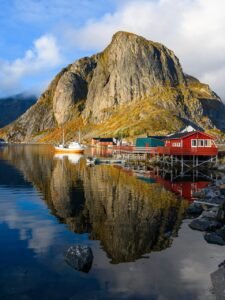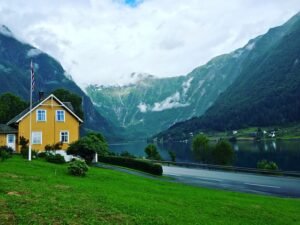

Norwegian literature boasts a rich tapestry woven from the threads of history, culture, and the natural landscape of Norway. From the medieval sagas that recount the exploits of Viking heroes to the modern narratives that explore contemporary issues, the evolution of Norwegian literature reflects the nation’s journey through time. Renowned authors such as Henrik Ibsen and Knut Hamsun have made significant contributions to the literary world, establishing Norway as a vital player in the global literary scene.
Their works delve into the complexities of human nature, societal norms, and existential dilemmas, often set against the backdrop of Norway’s stunning fjords and rugged terrain. The significance of literature in Norway extends beyond mere storytelling; it serves as a mirror reflecting the values, struggles, and aspirations of its people. The interplay between nature and human experience is a recurring theme, with many authors drawing inspiration from the breathtaking landscapes that define the country.
As one delves deeper into Norwegian literature, it becomes evident that understanding the language is crucial for appreciating the nuances and subtleties embedded within these texts. This is where learning Norwegian phrases becomes invaluable, particularly for those who wish to engage in discussions about books and literature. The NLS Norwegian Language School offers comprehensive courses for all levels. Register today to get started.
Summary
- Norwegian literature has a rich history dating back to the Viking Age, with notable authors such as Henrik Ibsen and Knut Hamsun.
- When discussing books in Norwegian, common phrases include “Hva synes du om boken?” (What do you think of the book?) and “Jeg likte karakterene i boken” (I liked the characters in the book).
- To express opinions on literature in Norwegian, phrases like “Jeg synes boken var spennende” (I think the book was exciting) and “Jeg likte ikke slutten” (I didn’t like the ending) are commonly used.
- When describing the plot and characters in Norwegian, phrases such as “Handlingen utvikler seg langsomt” (The plot develops slowly) and “Hovedkarakteren er kompleks” (The main character is complex) are useful.
- When discussing literary themes and motifs in Norwegian, phrases like “Boken utforsker temaet av ensomhet” (The book explores the theme of loneliness) and “Motivet av kjærlighet er sentralt i boken” (The motif of love is central in the book) can be used.
- Norwegian phrases for recommending books include “Du bør lese denne boken” (You should read this book) and “Jeg anbefaler denne for alle” (I recommend this to everyone).
- To express agreement and disagreement in Norwegian literary discussions, phrases like “Jeg er enig med deg” (I agree with you) and “Jeg er uenig, jeg synes annerledes” (I disagree, I think differently) are commonly used.
- When asking for and giving book recommendations in Norwegian, phrases such as “Kan du anbefale en god bok?” (Can you recommend a good book?) and “Jeg anbefaler denne for deg” (I recommend this one for you) are helpful.
- Using Norwegian phrases to talk about favourite authors and genres can include “Min favorittforfatter er Jo Nesbø” (My favourite author is Jo Nesbø) and “Jeg liker å lese krimromaner” (I like to read crime novels).
- The impact of literature in Norwegian culture is significant, with a strong tradition of storytelling and a deep appreciation for literary works that reflect the country’s history and values.
- Learning Norwegian phrases for discussing books and literature is important for engaging in meaningful conversations and gaining a deeper understanding of Norwegian culture and society.
Common phrases for discussing books in Norwegian
When embarking on conversations about literature in Norwegian, it is essential to equip oneself with a repertoire of common phrases that facilitate meaningful dialogue. For instance, one might start by expressing interest in a particular book with phrases like “Har du lest denne boka?” (Have you read this book?) or “Hva synes du om denne romanen?” (What do you think about this novel?). These questions not only initiate discussions but also invite others to share their perspectives, fostering a collaborative exploration of literary themes.
Additionally, using phrases such as “Jeg likte boka fordi…” (I liked the book because…) or “Boka fikk meg til å tenke på…” (The book made me think about…) allows individuals to articulate their thoughts and feelings about a text. Engaging in such exchanges enriches the conversation and encourages a deeper understanding of the material. By mastering these common phrases, learners can confidently navigate discussions about literature, enhancing their appreciation for Norwegian literary works.
Expressing opinions on literature in Norwegian
Expressing opinions on literature is an integral part of any literary discussion, and in Norwegian, there are numerous ways to convey one’s thoughts effectively. For example, one might say “Jeg synes boka var fantastisk” (I think the book was fantastic) or “Jeg fant karakterene lite troverdige” (I found the characters to be somewhat unconvincing). These expressions not only communicate personal views but also invite others to reflect on their interpretations of the text.
Moreover, employing phrases like “For meg var temaet…” (For me, the theme was…) or “Jeg ble rørt av…” (I was moved by…) adds depth to one’s opinions. Such expressions allow for a more nuanced discussion, as they encourage participants to consider different angles and interpretations. By articulating opinions in this manner, individuals can engage in thoughtful conversations that explore the intricacies of literature while simultaneously honing their language skills.
Describing the plot and characters in Norwegian
Describing the plot and characters of a book is essential for any literary discussion, and doing so in Norwegian requires familiarity with specific vocabulary and structures. When summarising a plot, one might use phrases like “Handlingen foregår ..” (The story takes place in…) or “Boka handler om…” (The book is about…). These introductory phrases set the stage for a more detailed exploration of the narrative, allowing listeners to grasp the context before delving into specifics.
When discussing characters, it is important to convey their traits and motivations clearly. Phrases such as “Hovedpersonen er…” (The main character is…) or “Antagonisten har en kompleks personlighet” (The antagonist has a complex personality) help paint a vivid picture of the characters involved. Additionally, using adjectives like “sympatisk” (sympathetic) or “intrigant” (intriguing) can further enhance descriptions.
By mastering these descriptive phrases, learners can effectively communicate their understanding of a book’s plot and characters, enriching their discussions with fellow literature enthusiasts.
Discussing literary themes and motifs in Norwegian
Literary themes and motifs are central to understanding any work of literature, and discussing them in Norwegian can be both rewarding and enlightening. To initiate such discussions, one might use phrases like “Et sentralt tema i boka er…” (A central theme in the book is…) or “Motivet av naturen er gjennomgående” (The motif of nature is prevalent). These expressions provide a framework for exploring deeper meanings within a text, encouraging participants to consider how themes resonate with their own experiences.
Furthermore, discussing how themes relate to broader societal issues can lead to engaging conversations. For instance, one could say “Boka tar opp viktige spørsmål om…” (The book addresses important questions about…) or “Temaet om identitet er relevant i dagens samfunn” (The theme of identity is relevant in today’s society). Such statements not only highlight the significance of literary themes but also invite others to share their insights and interpretations.
By incorporating these phrases into discussions, learners can deepen their understanding of literature while fostering a collaborative environment for exploration.
Using Norwegian phrases to recommend books
Recommending books is an enjoyable aspect of literary discussions, and having a set of useful phrases at one’s disposal can make this process smoother. When suggesting a book to someone, one might say “Jeg anbefaler denne boka fordi…” (I recommend this book because…) or “Du bør lese denne romanen hvis du liker…” (You should read this novel if you like…). These phrases not only convey enthusiasm but also provide context for the recommendation.
Additionally, using expressions like “Denne boka er perfekt for deg som…” (This book is perfect for you if…) or “Jeg tror du vil sette pris på denne historien” (I think you will appreciate this story) personalises the recommendation and makes it more relatable. By mastering these phrases, learners can confidently share their literary favourites with others, fostering a sense of community among fellow readers.
Expressing agreement and disagreement in Norwegian literary discussions
In any discussion about literature, expressing agreement or disagreement is vital for fostering dynamic conversations. In Norwegian, one can express agreement with phrases such as “Jeg er enig i at…” (I agree that…) or “Det er et godt poeng” (That’s a good point). These expressions not only validate others’ opinions but also encourage further exploration of shared ideas.
Conversely, when disagreeing with someone’s perspective, it is important to do so respectfully. Phrases like “Jeg ser hva du mener, men…” (I see what you mean, but…) or “Jeg har en annen oppfatning av dette” (I have a different view on this) allow individuals to voice their dissent while maintaining a constructive dialogue. By incorporating these expressions into discussions, learners can engage in meaningful exchanges that promote critical thinking and diverse viewpoints.
Asking for and giving book recommendations in Norwegian
Asking for book recommendations is an excellent way to discover new literature and engage with fellow readers. In Norwegian, one might ask “Kan du anbefale en god bok?” (Can you recommend a good book?) or “Hva har du lest nylig som du likte?” (What have you read recently that you liked?). These questions open the door for sharing literary experiences and insights.
When providing recommendations, it is helpful to elaborate on why a particular book stands out. Phrases such as “Jeg anbefaler denne boka fordi den har en gripende historie” (I recommend this book because it has a gripping story) or “Den utforsker interessante temaer som…” (It explores interesting themes such as…) provide context that enriches the recommendation. By mastering these conversational tools, learners can actively participate in discussions about literature while expanding their reading horizons.
Using Norwegian phrases to talk about favourite authors and genres
Discussing favourite authors and genres is an enjoyable aspect of literary conversations that allows individuals to share their personal tastes. In Norwegian, one might say “Min favorittforfatter er…” (My favourite author is…) or “Jeg elsker bøker innen sjangeren…” (I love books within the genre of…). These phrases help establish personal connections and invite others to share their preferences.
Moreover, discussing what makes an author or genre appealing can lead to deeper conversations. For instance, one could say “Jeg beundrer denne forfatterens evne til å skape komplekse karakterer” (I admire this author’s ability to create complex characters) or “Sjangeren gir rom for kreativ utfoldelse” (The genre allows for creative expression). By incorporating these phrases into discussions about favourite authors and genres, learners can engage more fully with their peers while exploring diverse literary landscapes.
Discussing the impact of literature in Norwegian culture
Literature plays a pivotal role in shaping cultural identity and societal values in Norway. Engaging in discussions about its impact requires an understanding of specific phrases that articulate these ideas effectively. One might say “Litteratur har alltid vært en viktig del av norsk kultur” (Literature has always been an important part of Norwegian culture) or “Forfattere har bidratt til å forme samfunnsdebatten” (Authors have contributed to shaping societal debates).
Such statements highlight the significance of literature within the broader cultural context. Furthermore, exploring how literature reflects historical events or social changes can lead to insightful conversations. Phrases like “Bøker kan fungere som et speil av samfunnet” (Books can serve as a mirror of society) or “Litteratur kan utfordre normer og verdier” (Literature can challenge norms and values) underscore the transformative power of literary works.
By mastering these expressions, learners can engage thoughtfully in discussions about literature’s role in shaping Norwegian culture.
the importance of learning Norwegian phrases for discussing books and literature
In conclusion, learning Norwegian phrases for discussing books and literature is essential for anyone seeking to engage meaningfully with Norway’s rich literary heritage. The ability to express opinions, describe plots and characters, discuss themes, and recommend books enhances not only one’s language skills but also fosters connections with fellow readers. As individuals delve into conversations about literature, they gain insights into cultural nuances and diverse perspectives that enrich their understanding of both language and literature.
At NLS Norwegian Language School in Oslo, students have access to comprehensive courses designed specifically for those interested in mastering the language while exploring its literary treasures. The school’s curriculum emphasises practical language use within cultural contexts, making it an ideal environment for learners passionate about literature. By participating in these courses, students can develop their conversational skills while immersing themselves in Norway’s vibrant literary scene—an experience that promises to be both educational and inspiring.
Start your Norwegian language journey with Oslo’s leading school.