
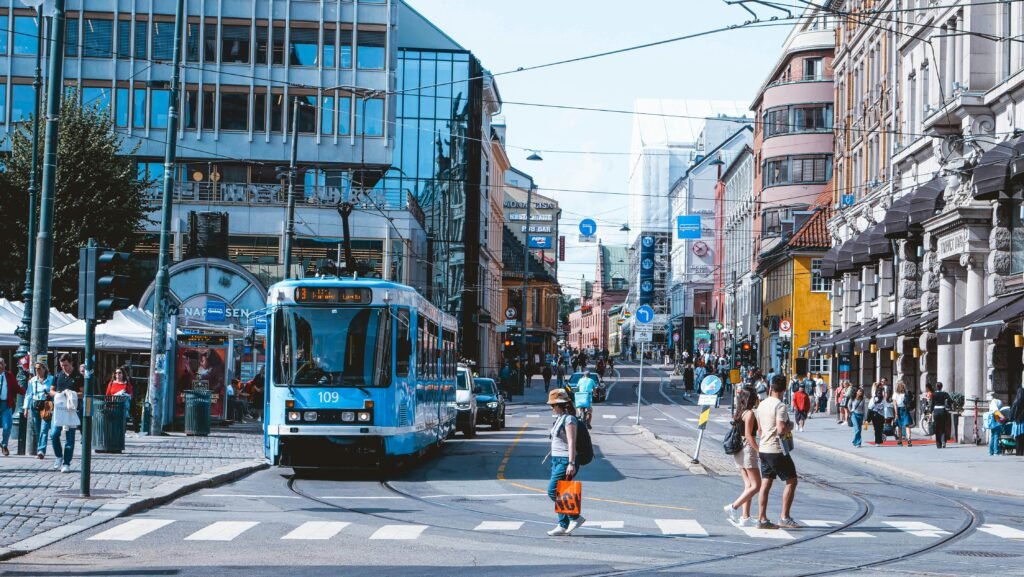
When embarking on a journey to a new country, the first step often involves mastering the art of greetings and introductions. In Norway, a warm “Hei!” (Hello!) is a common way to initiate conversation, and it sets a friendly tone for any interaction. Norwegians appreciate directness, so when introducing yourself, it’s customary to state your name clearly and perhaps share a little about where you come from. A simple introduction might go like this: “Hei, jeg heter [Your Name], og jeg kommer fra [Your Country].” This not only helps break the ice but also shows respect for the local language.
In addition to verbal greetings, non-verbal communication plays a significant role in Norwegian culture. A firm handshake is the standard greeting when meeting someone for the first time, accompanied by eye contact to convey sincerity. As you navigate through social situations, remember that personal space is valued; standing too close may make some feel uncomfortable. Understanding these nuances can enhance your interactions and help you forge connections with locals.
Food and Beverage Terminology
Exploring a new culture often begins with its cuisine, and Norway is no exception. Familiarizing yourself with food and beverage terminology can significantly enrich your experience. For instance, knowing how to order traditional dishes like “lutefisk” (dried fish) or “klippfisk” (dried and salted cod) can lead to delightful culinary adventures. When dining out, phrases such as “Kan jeg få menyen, vær så snill?” (Can I have the menu, please?) or “Hva anbefaler du?” (What do you recommend?) can be incredibly useful.
Moreover, understanding beverage terminology is equally important. Whether you’re ordering a refreshing “øl” (beer) or a comforting “kaffe” (coffee), being able to articulate your preferences will enhance your dining experience. Additionally, if you have dietary restrictions, knowing how to express them in Norwegian can prevent misunderstandings. For example, saying “Jeg er allergisk mot nøtter” (I am allergic to nuts) ensures that your needs are communicated clearly.
Room and Accommodation Vocabulary
When traveling, securing comfortable accommodation is paramount, and knowing the right vocabulary can make this process smoother. In Norway, terms like “rom” (room), “hotell” (hotel), and “leilighet” (apartment) are essential for navigating your options. When checking in, you might say, “Jeg har en reservasjon under navnet [Your Name]” (I have a reservation under the name [Your Name]), which will help streamline the process.
Additionally, understanding specific room types can enhance your stay. For instance, if you prefer a “enkeltrom” (single room) or a “dobbeltrom” (double room), being able to articulate this preference will ensure you get the accommodation that suits your needs. Furthermore, knowing phrases related to amenities—such as “Har dere gratis Wi-Fi?” (Do you have free Wi-Fi?)—can help you make informed choices about where to stay.
Customer Service Phrases
In any service-oriented environment, effective communication is key. Familiarizing yourself with customer service phrases in Norwegian can significantly improve your interactions with staff in hotels, restaurants, and shops. Simple expressions like “Kan jeg få hjelp?” (Can I get help?) or “Hvor er toalettet?” (Where is the restroom?) can be invaluable when seeking assistance.
Moreover, expressing gratitude is an essential part of customer service etiquette. Phrases such as “Takk for hjelpen!” (Thank you for your help!) or “Jeg setter pris på det!” (I appreciate it!) not only convey politeness but also foster positive relationships with service personnel. Understanding these phrases will not only enhance your experience but also demonstrate respect for the local culture.
Booking and Reservation Terms
| English | Norwegian |
|---|---|
| Hello | Hallo |
| Goodbye | Farvel |
| Thank you | Takk |
| You’re welcome | Vær så god |
| Excuse me | Unnskyld meg |
| Menu | Meny |
| Reservation | Reservasjon |
| Room | Rom |
| Bill | Regning |
When planning your itinerary in Norway, mastering booking and reservation terms is crucial. Whether you’re securing a table at a restaurant or booking a guided tour, knowing how to navigate these conversations can save time and prevent confusion. For instance, when making a reservation over the phone or online, you might say, “Jeg vil gjerne bestille et bord for to klokken syv” (I would like to book a table for two at seven).
Additionally, understanding cancellation policies and terms is vital when making reservations. Phrases like “Hva er avbestillingsreglene?” (What are the cancellation policies?) can help clarify any uncertainties before finalizing your plans. Being well-versed in these terms will empower you to make informed decisions during your travels.
Emergency and Safety Vocabulary
Let us help you achieve Norwegian fluency.
While traveling is often filled with joy and adventure, it’s essential to be prepared for emergencies as well. Familiarizing yourself with emergency and safety vocabulary can provide peace of mind during your stay in Norway. Knowing how to say “Hjelp!” (Help!) or “Jeg trenger en lege” (I need a doctor) can be crucial in urgent situations.
Additionally, understanding how to communicate your location can aid emergency responders in assisting you effectively. Phrases like “Hvor er nærmeste sykehus?” (Where is the nearest hospital?) or “Jeg har mistet lommeboken min” (I have lost my wallet) are important to know. Being equipped with this vocabulary ensures that you can navigate unexpected situations with confidence.
Directions and Location Words
Navigating a new city can be daunting without the right vocabulary for directions and locations. In Norway, terms such as “venstre” (left), “høyre” (right), and “rett fram” (straight ahead) are essential for asking for or giving directions. When seeking guidance, you might ask, “Kan du vise meg veien til [Location]?” (Can you show me the way to [Location]?), which opens up opportunities for helpful interactions with locals.
Moreover, understanding location-related vocabulary can enhance your exploration of Norwegian cities. Words like “gate” (street), “plass” (square), and “park” are commonly used when discussing places of interest. Being able to articulate where you want to go will not only make navigation easier but also enrich your overall travel experience.
Payment and Billing Terms
When it comes to settling bills or making purchases in Norway, being familiar with payment and billing terms is essential. Knowing how to say “Hvor mye koster dette?” (How much does this cost?) or “Kan jeg betale med kort?” (Can I pay by card?) will facilitate smoother transactions at shops and restaurants.
Additionally, understanding different payment methods available in Norway can enhance your convenience while traveling. With many establishments accepting credit cards and mobile payments, being able to inquire about payment options—such as “Tar dere Vipps?” (Do you accept Vipps?)—will ensure that you are prepared for various situations.
Cultural and Social Etiquette
Cultural awareness is vital when visiting a new country, and Norway has its own unique social etiquette that travelers should be mindful of. For instance, Norwegians value punctuality; arriving on time for social gatherings or appointments is seen as a sign of respect. When invited to someone’s home, it’s customary to bring a small gift—such as flowers or chocolates—as a token of appreciation.
Moreover, understanding the concept of “Janteloven,” which emphasizes humility and discourages boasting about one’s achievements, can help you navigate social interactions more smoothly. Engaging in conversations about shared interests rather than personal accomplishments will resonate well with locals and foster genuine connections.
Common Phrases for Small Talk
Small talk is an essential part of social interactions, and having a repertoire of common phrases can help you engage with locals effortlessly. In Norway, starting with simple questions like “Hvordan har du det?” (How are you?) or “Hva synes du om været?” (What do you think about the weather?) can lead to enjoyable conversations.
Additionally, expressing interest in local culture or events can further enrich your small talk experience. Asking questions such as “Har du noen anbefalinger til steder å besøke?” (Do you have any recommendations for places to visit?) shows that you value their input and are eager to learn more about their culture.
Specialized Vocabulary for Tourist Attractions and Activities
As you explore Norway’s breathtaking landscapes and vibrant cities, having specialized vocabulary related to tourist attractions and activities will enhance your experience significantly. Terms like “museum” (museum), “tur” (hike), and “severdigheter” (sights) are essential when discussing plans with locals or fellow travelers.
When visiting popular attractions such as the iconic fjords or historical sites like the Akershus Fortress in Oslo, being able to ask questions like “Hva er åpningstidene?” (What are the opening hours?) or “Er det guidede turer tilgjengelig?” (Are guided tours available?) will help you make the most of your visits. This specialized vocabulary not only facilitates communication but also deepens your appreciation of Norway’s rich cultural heritage.
In conclusion, immersing yourself in the Norwegian language through courses at the NLS Norwegian Language School in Oslo can significantly enhance your travel experience. The school offers comprehensive programs tailored for all levels of learners, ensuring that whether you’re a beginner or looking to refine your skills, you’ll find suitable courses that meet your needs. By enrolling in these courses, you’ll gain not only language proficiency but also cultural insights that will enrich your interactions with locals throughout your journey in Norway. Embrace this opportunity to learn Norwegian at NLS and unlock the full potential of your travel experience!