
Norwegian (En)
Norwegian Subject and Object Pronouns
“Personlig pronomen” (Personal pronouns) represent people, animals, places, and things and can be classified as subject or object. 1 Subject form jeg (I) du (you) han (he) hun (she) den

“Personlig pronomen” (Personal pronouns) represent people, animals, places, and things and can be classified as subject or object. 1 Subject form jeg (I) du (you) han (he) hun (she) den

Norway is a country that is politically stable, transparent, and well-developed. As a result, it is an excellent place to relocate for many people. Although many people in Norway speak English,

In this article, we will go through when you should use capital and lowercase letters and when not in Norwegian. When to use capitalized letters The first word
Here are some popular sports in Norwegian. What is your favorite sport? 1 basketball (basketball) 2 håndball (handball) 3 fotball (soccer) 4 ishockey (ice hockey) 5 boksing (boxing) 6 bryting

Both “å synes” and “å tro” can be translated into “think” in English, but the meanings of these two expressions are different in Norwegian. This article will explain the difference

Idiom 1: Is i magen (Ice in the stomach) “Ha is i magen” means “to remain calm and in control.” While the expression “is i magen” can be literally translated

What is the difference between “både,” “begge,” “begge to” og “begge deler”? As you might have noticed, the Norwegian words “både” and “begge” both means “both”! However, these two words
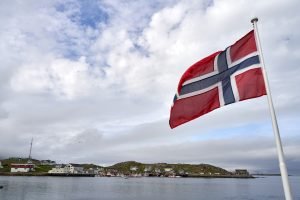
Some Norwegian learners struggle because the Norwegian alphabet has three letters that are not included in the standard 26-letter Latin alphabet. These are the letters Ææ, Øø, and Åå. You

Today we will talk about how to count from one to ten. You’ve got to start somewhere. To practice the pronunciation of the numbers, you’ll need to practice your pronunciation

In this article, we share 50 basic Norwegian phrases you should know when learning Norwegian. 1 Hei! Hi! 2 Hallo! Hello! 3 Ja. Yes. 4 Nei. No. 5 Jeg vil