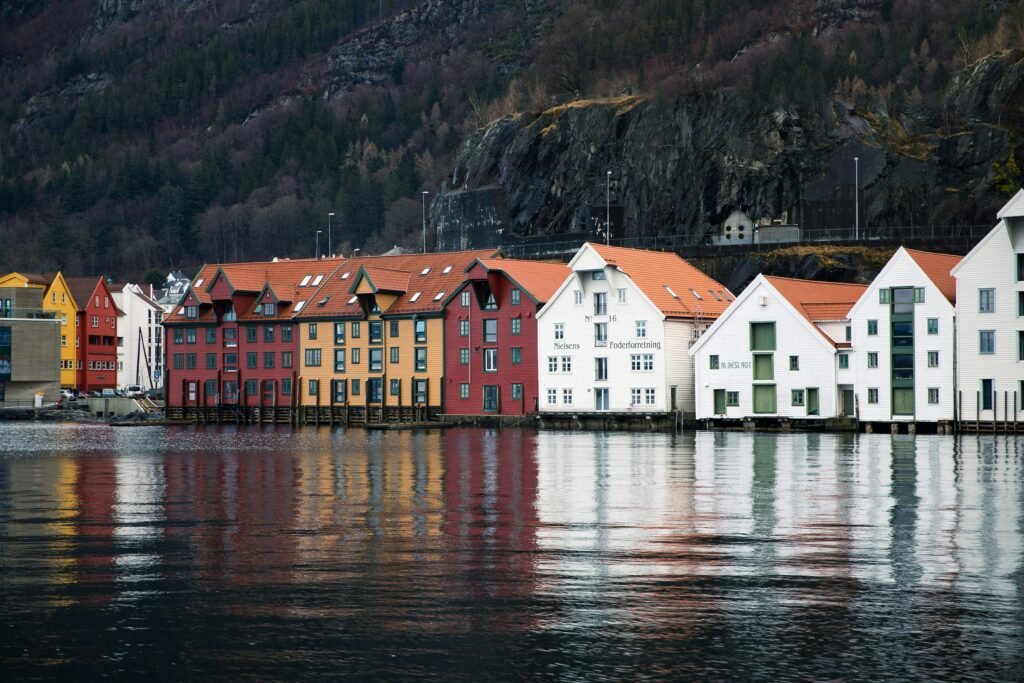
Writing a blog in Nynorsk presents a unique opportunity to engage with a significant minority language of Norway and contribute to its digital presence. While Norwegian Bokmål is more widely used, Nynorsk boasts a dedicated community and a rich literary tradition. This guide will walk you through the process of creating and maintaining a Nynorsk blog, from initial concept to ongoing content creation.
Before diving into the practicalities of setting up your blog, it’s essential to grasp the fundamentals of Nynorsk and its place within the Norwegian language landscape. This section will explore the key characteristics of Nynorsk and its suitability for a blogging format.
The Basics of Nynorsk Grammar and Vocabulary
Nynorsk, one of the two official written standards of Norwegian, developed in the 19th century as an attempt to create a written language that was closer to thespoken dialects of Norway, contrasting with Bokmål which is more closely related to Danish. This foundation means Nynorsk often exhibits more varied conjugations and declensions compared to Bokmål, as well as distinct vocabulary choices.
Verb Conjugations in Nynorsk
Verbs in Nynorsk follow a pattern of conjugation that differs from Bokmål. For instance, the infinitive often ends in “-e” (e.g., “å skrive” – to write), the present tense in “-er” (e.g., “skrivar” – writes), and the past tense in “-de” or “-te” (e.g., “skreiv” or “skreidde” – wrote). Understanding these variations is crucial for accurate writing.
Common Verb Forms and Their Bokmål Equivalents
- Å vere (to be): Eg er, du er, han/ho er, vi er, de er, dei er (present). Eg var (past).
- Å ha (to have): Eg har, du har, han/ho har, vi har, de har, dei har (present). Eg hadde (past).
- Å gjere (to do/make): Eg gjer, du gjer, han/ho gjer, vi gjer, de gjer, dei gjer (present). Eg gjorde (past).
Pronouns and Nouns in Nynorsk
Nynorsk also features distinct pronoun forms and noun declensions. While Bokmål generally uses a simpler system, Nynorsk retains more inflections, particularly in demonstrative pronouns and possessives.
Gender and Number Agreement
Nynorsk recognizes three grammatical genders: masculine, feminine, and neuter. Nouns change their form depending on gender and number (singular and plural), and articles and adjectives must agree with the noun they modify.
Demonstrative Pronouns: This/That
- Denne/Dette/Dette (this): Used for things near the speaker. “Denne boka” (this book – masculine/feminine), “Dette huset” (this house – neuter).
- Den/Det/Dei (that): Used for things further away. “Den boka” (that book), “Det huset” (that house), “Dei bøkene” (those books).
The Relevance of Nynorsk in the Digital Age
Despite being spoken by a smaller percentage of Norwegians, Nynorsk has a strong presence online. Many official bodies, educational institutions, and cultural organizations utilize Nynorsk. A Nynorsk blog can tap into this existing audience and contribute to the language’s continued vitality.
Nynorsk Communities and Online Resources
Numerous websites and online forums are dedicated to Nynorsk. These can be valuable resources for learning, finding inspiration, and connecting with other Nynorsk speakers and writers.
Where to Find Nynorsk Content and Support
- Nynorsk Pressekontor: Provides news in Nynorsk.
- Nynorsk Ordbok: The official Nynorsk dictionary.
- Nynorsk forum and social media groups: Active online communities for discussion and assistance.
Planning Your Nynorsk Blog
Before you start writing, a clear plan is essential. This section will guide you through the crucial steps of defining your blog’s purpose, identifying your target audience, and choosing a suitable platform.
Defining Your Blog’s Niche and Purpose
What do you want to write about?
Unlock opportunities in Norway. Start building your Nynorsk skills with NLS today.—–