Navigating a new country can be both exhilarating and daunting, especially when it comes to finding your way around. In Norway, where stunning landscapes and vibrant cities beckon, knowing how to ask for directions in Norwegian can significantly enhance your travel experience. The ability to communicate effectively not only helps you reach your destination but also opens the door to engaging with locals, who are often more than willing to assist.
This article aims to equip you with essential phrases, cultural insights, and practical tips for asking for directions in Norway, ensuring that you feel confident and prepared during your journey. Asking for directions is a fundamental skill for any traveller. In Norway, the language may seem challenging at first, but with a little practice, you can master the basics.
The Norwegian language is rich and melodic, and while many Norwegians speak English fluently, making an effort to communicate in their native tongue is often appreciated. This not only shows respect for the culture but also fosters a sense of connection with the people you meet along the way. Whether you find yourself in the bustling streets of Oslo or the serene countryside, knowing how to ask for directions will empower you to explore with ease. The NLS Norwegian Language School offers comprehensive courses for all levels. Register today to get started.
Summary
- Asking for directions in Norwegian can be a useful skill for navigating the streets of Norway.
- Basic phrases such as “Unnskyld meg, hvor er…?” (Excuse me, where is…?) can help you ask for directions in Norwegian.
- Polite ways to ask for directions include using “Vær så snill” (please) and “Takk” (thank you) when speaking to locals.
- Understanding Norwegian street signs is important for navigating the roads and finding your way around the country.
- Common landmarks and directions vocabulary such as “kirke” (church) and “rett fram” (straight ahead) can be helpful for getting around in Norway.
Basic Phrases for Asking for Directions
When it comes to asking for directions in Norwegian, there are several key phrases that can serve as your linguistic toolkit. One of the most fundamental phrases is “Unnskyld, kan du hjelpe meg?” which translates to “Excuse me, can you help me?” This polite opener sets a friendly tone and invites assistance. Following this, you might want to ask, “Hvor er…?” meaning “Where is…?” This phrase can be adapted to include specific locations such as “Hvor er nærmeste busstopp?” (Where is the nearest bus stop?) or “Hvor er sentrum?” (Where is the city centre?).
Another useful phrase is “Jeg leter etter…” which means “I am looking for…” This can be particularly helpful when you have a specific destination in mind. For instance, “Jeg leter etter hotellet mitt” translates to “I am looking for my hotel.” By using these basic phrases, you can effectively communicate your needs and navigate your surroundings with greater confidence.
Polite Ways to Ask for Directions
Politeness is an integral part of Norwegian culture, and this extends to how one asks for directions. To ensure that your request is received positively, it’s beneficial to incorporate polite expressions into your inquiries. Starting with “Unnskyld meg” (Excuse me) or “Beklager” (Sorry) can soften your approach and make it more courteous.
For example, you might say, “Unnskyld meg, kan du fortelle meg hvor jeg finner…?” which means “Excuse me, can you tell me where I can find…?” Additionally, expressing gratitude is essential in any interaction. After receiving directions, a simple “Takk” (Thank you) or “Tusen takk” (Thank you very much) goes a long way in showing appreciation. Norwegians value politeness and sincerity, so taking the time to be courteous will not only enhance your experience but may also encourage locals to engage further with you.
Understanding Norwegian Street Signs
Navigating through Norwegian cities and towns requires a basic understanding of street signs and their meanings. Most signs are straightforward and often include both Norwegian and English translations, especially in urban areas frequented by tourists. Familiarising yourself with common signs such as “Veien stenger” (Road closed) or “Fartsgrense” (Speed limit) can help you interpret your surroundings more effectively.
In addition to traffic signs, directional signs are prevalent throughout Norway. Look out for signs indicating points of interest such as “Severdigheter” (Attractions) or “Offentlig transport” (Public transport). Understanding these signs will not only assist you in finding your way but also enrich your appreciation of the local environment.
Moreover, many cities have maps available at tourist information centres that can provide further clarity on navigating the area.
Common Landmarks and Directions Vocabulary
When asking for directions, it’s helpful to be familiar with common landmarks and relevant vocabulary. Landmarks such as “kirke” (church), “museum” (museum), and “parken” (the park) are often focal points in cities and can serve as reference points when seeking guidance. For instance, if you want to know how to get to the nearest church, you could ask, “Hvordan kommer jeg meg til kirken?” (How do I get to the church?).
Additionally, understanding directional vocabulary will aid in comprehending the responses you receive. Words like “venstre” (left), “høyre” (right), and “rett fram” (straight ahead) are crucial when following directions. A typical response might include phrases like “Gå til venstre ved krysset” (Turn left at the intersection) or “Fortsett rett fram i fem minutter” (Continue straight ahead for five minutes).
By familiarising yourself with this vocabulary, you will be better equipped to navigate your surroundings confidently.
Using Public Transport in Norway
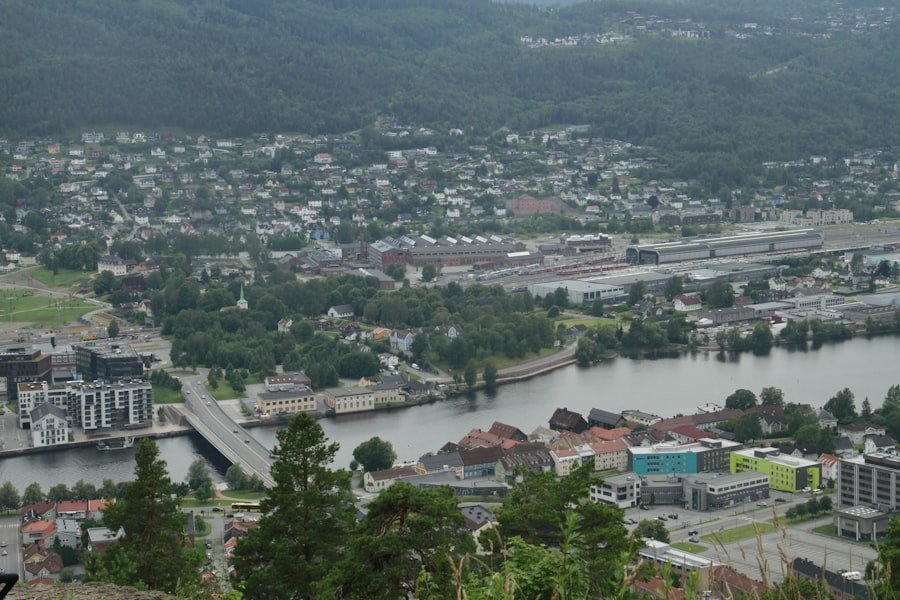
Public transport is an efficient way to explore Norway’s cities and towns. Buses, trams, and trains are well-connected and provide an excellent means of getting around. When asking for directions related to public transport, it’s useful to know specific terms such as “buss” (bus), “trikk” (tram), and “tog” (train).
You might ask, “Hvor finner jeg busstasjonen?” (Where can I find the bus station?) or “Når går neste tog til Bergen?” (When does the next train to Bergen leave?). In addition to asking about transport options, understanding how to read schedules and maps is essential. Most public transport systems have clear signage indicating routes and times.
Familiarising yourself with these systems will not only make your travels smoother but also allow you to experience Norway more fully as you venture beyond the main tourist attractions.
Navigating Norwegian Cities and Towns
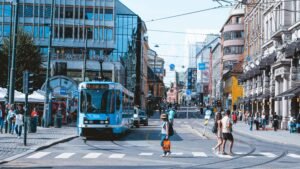
Each Norwegian city has its unique layout and charm, making navigation an adventure in itself. In larger cities like Oslo or Bergen, street names may change frequently, so it’s wise to have a map or a navigation app handy. When asking for directions in these urban environments, consider using landmarks as reference points.
For example, you could say, “Kan du vise meg veien til Akershus Festning?” (Can you show me the way to Akershus Fortress?). In smaller towns, the atmosphere is often more relaxed, and locals may be more inclined to engage in conversation. Here, asking for directions might lead to friendly exchanges about local history or recommendations for hidden gems worth visiting.
Embrace these opportunities; they can enrich your travel experience and provide insights that guidebooks may overlook.
Asking for Directions in Rural Areas
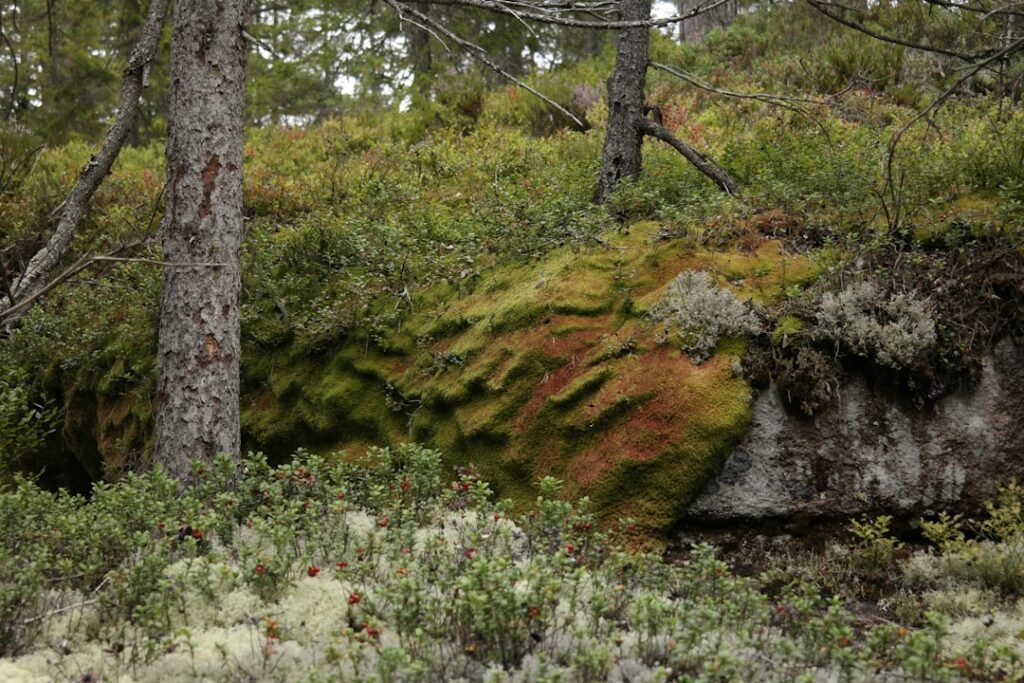
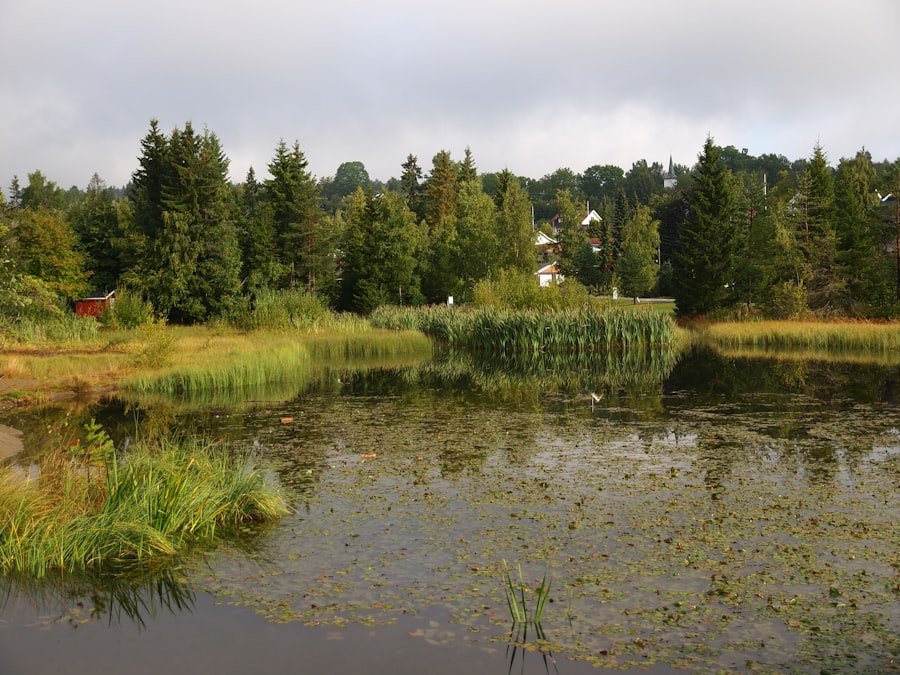
While urban navigation has its challenges, rural areas present a different set of circumstances when it comes to asking for directions. In Norway’s picturesque countryside, where villages are often spread out and landmarks may be fewer, it’s essential to approach locals with patience and respect. You might find yourself asking questions like “Hvor ligger nærmeste landsby?” (Where is the nearest village?) or “Er det langt til fjorden?” (Is it far to the fjord?).
In rural settings, people may not always be accustomed to tourists seeking directions; however, they are generally friendly and willing to help. It’s advisable to approach individuals who appear approachable—perhaps those enjoying a leisurely walk or working outdoors—and politely inquire about your route. Their local knowledge can lead you down scenic paths that may not be on any map.
Dealing with Language Barriers
While many Norwegians speak English proficiently, language barriers can still arise during your travels. If you find yourself struggling to communicate effectively in Norwegian, don’t hesitate to switch to English if necessary; most locals will understand and appreciate your effort. However, it’s always beneficial to have a few key phrases at hand that can bridge any gaps in communication.
If someone responds in Norwegian and you’re unsure of what they said, politely ask them to repeat themselves or clarify by saying “Kan du si det igjen?” (Can you say that again?). Additionally, using gestures or pointing at maps can help convey your message when words fail. Remember that patience is key; both you and the person you’re speaking with are likely doing your best to understand one another.
Tips for Getting Clear and Accurate Directions
To ensure that you receive clear and accurate directions while navigating Norway, consider a few practical tips. Firstly, when asking for directions, try to be as specific as possible about your destination. Providing additional context—such as nearby landmarks or street names—can help locals give more precise guidance.
Secondly, don’t hesitate to ask follow-up questions if something isn’t clear. Phrases like “Hva mener du med det?” (What do you mean by that?) or “Kan du forklare det på en annen måte?” (Can you explain it another way?) can facilitate better understanding. Lastly, if you’re given verbal directions that seem complex or difficult to remember, ask if they could write them down for you; this simple request can save time and confusion later on.
Cultural Etiquette when Asking for Directions in Norway
Cultural etiquette plays a significant role in how interactions unfold while asking for directions in Norway. Norwegians value directness but also appreciate politeness; therefore, striking a balance between being straightforward and courteous is essential. When approaching someone for help, maintain a friendly demeanour and make eye contact—this establishes rapport and shows that you’re genuinely seeking assistance.
Moreover, respecting personal space is crucial in Norwegian culture; avoid standing too close when speaking with someone. Additionally, if you’re in a public place like a café or shop when asking for directions, it’s polite to acknowledge the setting by saying something like “Beklager å forstyrre” (Sorry to interrupt). By adhering to these cultural norms while seeking assistance, you’ll foster positive interactions that enhance your overall experience in Norway.
In conclusion, mastering the art of asking for directions in Norwegian not only aids in navigating the country but also enriches your travel experience through meaningful interactions with locals. The NLS Norwegian Language School in Oslo offers comprehensive courses designed specifically for those looking to improve their language skills while immersing themselves in Norwegian culture. With expert instructors and tailored programmes that cater to various proficiency levels, students can gain confidence in their ability to communicate effectively—whether they are exploring urban landscapes or venturing into rural areas.
By enrolling in courses at NLS Norwegian Language School, you’ll not only learn essential phrases but also delve into cultural nuances that will enhance your understanding of how Norwegians communicate. The school’s immersive approach ensures that students are well-prepared for real-life situations like asking for directions—making it an invaluable resource for anyone looking to explore Norway more deeply. So whether you’re planning a short visit or an extended stay in this beautiful country, consider taking advantage of the Norwegian courses offered at NLS; they will undoubtedly enrich your journey through Norway’s stunning landscapes and vibrant communities.
Start your Norwegian language journey with Oslo’s leading school.