


Arabic rhetoric holds a significant place in the tapestry of linguistic and cultural expression within the Arab world. It is not merely a tool for communication; it is an art form that encapsulates the richness of the Arabic language and its profound ability to convey complex ideas and emotions. The importance of Arabic rhetoric extends beyond mere eloquence; it serves as a bridge connecting the past with the present, allowing speakers and writers to engage with their audience on a deeper level.
In a world increasingly dominated by digital communication, the nuances of Arabic rhetoric remind us of the power of words and the impact they can have on society. Moreover, Arabic rhetoric is essential for understanding the cultural identity of Arabic-speaking communities. It reflects the values, beliefs, and traditions that have been passed down through generations.
The ability to articulate thoughts persuasively is not only a skill but also a means of preserving cultural heritage. In this sense, Arabic rhetoric is vital for fostering a sense of belonging and continuity among speakers, enabling them to navigate contemporary issues while remaining rooted in their historical context. Go beyond the ordinary. Challenge yourself by learning Arabic with the language experts at NLS Oslo.
Summary
- Arabic rhetoric is crucial for understanding the nuances of Arabic language and culture.
- The origins of Arabic rhetoric can be traced back to ancient civilizations and have evolved over time.
- Key concepts of Arabic rhetoric include eloquence, exaggeration, and conciseness.
- Arabic rhetoric plays a significant role in shaping literature, oratory, and cultural expression.
- The three pillars of Arabic rhetoric, Bayan, Mubalagha, and Iktisar, are essential for mastering the art of communication in Arabic.
Understanding the Origins of Arabic Rhetoric
The origins of Arabic rhetoric can be traced back to the pre-Islamic era, where oral traditions flourished in the Arabian Peninsula. Poets and storytellers were revered figures, using their mastery of language to captivate audiences and convey moral lessons. This oral tradition laid the groundwork for what would later evolve into a more formalised system of rhetoric.
The advent of Islam in the 7th century further enriched this tradition, as the Quran itself is often cited as a pinnacle of rhetorical excellence. Its intricate use of language, rhythm, and metaphor has inspired countless scholars and poets throughout history. As Arabic rhetoric developed, it began to incorporate elements from various cultures and philosophies, including Greek and Roman influences.
Scholars such as Al-Jahiz and Ibn Rashid contributed significantly to the field, analysing and codifying rhetorical techniques that would shape future generations. This blending of ideas not only enhanced the complexity of Arabic rhetoric but also established it as a distinct discipline worthy of study in its own right.
The Key Concepts of Arabic Rhetoric
At the heart of Arabic rhetoric lie several key concepts that define its unique character. One such concept is “Bayan,” which refers to clarity and eloquence in expression. It emphasises the importance of choosing words carefully to convey meaning effectively.
This principle is particularly significant in poetry and prose, where the beauty of language can elevate a simple message into something profound. The art of Bayan encourages writers and speakers to be mindful of their audience, crafting their messages in ways that resonate deeply. Another essential concept is “Mubalagha,” which translates to exaggeration or amplification.
This technique is often employed to emphasise a point or evoke strong emotions in the audience. By using hyperbole or vivid imagery, speakers can create a lasting impact, making their messages more memorable. Mubalagha is frequently found in both classical and contemporary Arabic literature, showcasing the versatility of rhetorical devices in engaging readers and listeners alike.
The Role of Arabic Rhetoric in Literature and Oratory
Arabic rhetoric plays a pivotal role in both literature and oratory, serving as a foundation for artistic expression across various genres. In literature, it enriches narratives by adding layers of meaning and emotional depth. Poets, for instance, utilise rhetorical devices to create imagery that resonates with readers on multiple levels.
The interplay between sound and meaning in Arabic poetry exemplifies how rhetoric can transform language into an evocative experience. In oratory, the significance of Arabic rhetoric becomes even more pronounced. Public speaking has long been an esteemed tradition in Arab culture, with eloquent speakers often regarded as leaders and influencers.
The ability to persuade an audience through well-crafted arguments and emotive language is a skill that has been honed over centuries. Rhetorical techniques such as repetition, parallelism, and metaphor are employed to captivate listeners, making speeches not only informative but also inspiring.
Exploring the Three Pillars of Arabic Rhetoric: Bayan, Mubalagha, and Iktisar
The three pillars of Arabic rhetoric—Bayan, Mubalagha, and Iktisar—form the backbone of effective communication within the Arabic language. As previously mentioned, Bayan focuses on clarity and eloquence, ensuring that messages are conveyed with precision. This pillar encourages speakers and writers to choose their words thoughtfully, enhancing the overall impact of their communication.
Mubalagha, as discussed earlier, involves exaggeration or amplification to evoke strong emotions or highlight key points. This technique allows for creative expression while ensuring that messages resonate with audiences on an emotional level. The use of vivid imagery and hyperbole can transform ordinary statements into powerful declarations that linger in the minds of listeners.
The third pillar, Iktisar, refers to conciseness or brevity in expression. In a world where attention spans are often limited, the ability to convey complex ideas succinctly is invaluable. Iktisar encourages communicators to distil their thoughts into clear and impactful statements, ensuring that their messages are easily understood without sacrificing depth or meaning.
The Influence of Arabic Rhetoric on Islamic and Arabic Culture
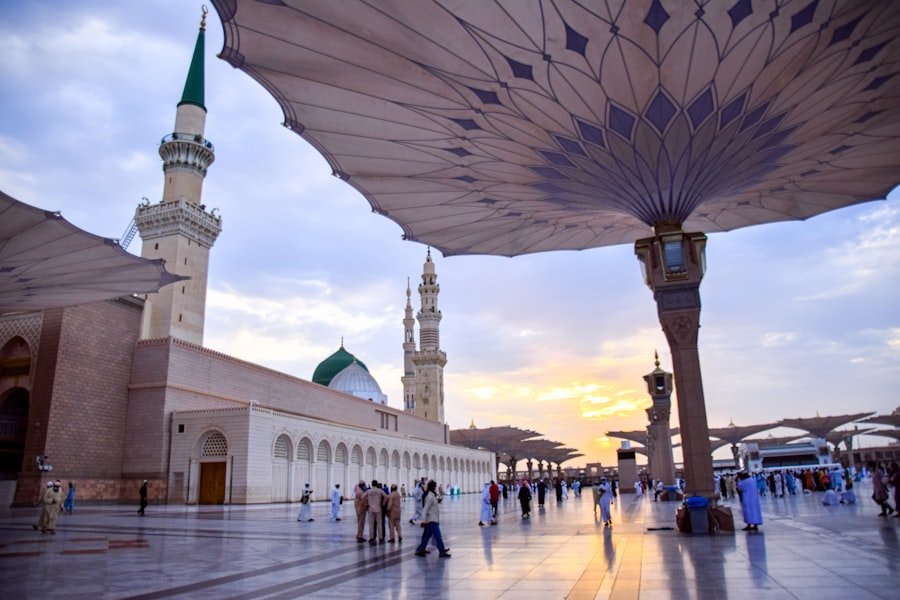
Arabic rhetoric has profoundly influenced Islamic culture and thought throughout history. The Quran’s linguistic beauty and rhetorical structure have inspired countless scholars to explore its depths, leading to rich theological discussions and interpretations. The rhetorical devices employed within the Quran serve not only as a means of conveying divine messages but also as a model for effective communication within Islamic discourse.
Furthermore, Arabic rhetoric has shaped cultural practices beyond religious contexts. It has permeated various aspects of daily life, from storytelling traditions to political discourse. The art of persuasion remains a vital skill in contemporary Arab societies, where public speaking often plays a crucial role in political activism and social movements.
The legacy of Arabic rhetoric continues to thrive, reflecting its enduring significance in shaping cultural identity.
The Evolution of Arabic Rhetoric throughout History
The evolution of Arabic rhetoric is marked by significant developments that reflect broader societal changes. During the Abbasid Caliphate (750-1258), there was a flourishing of intellectual activity that saw scholars engage with various philosophical traditions. This period witnessed the formalisation of rhetorical principles as scholars sought to codify techniques for effective communication.
Works such as “Al-Ma’ani” by Al-Jahiz exemplify this intellectual pursuit. The decline of the Abbasid Caliphate led to shifts in rhetorical practices as new cultural influences emerged from Europe during the Renaissance. The interaction between Arab scholars and European thinkers facilitated the exchange of ideas that enriched both traditions.
As modernity took hold in the 19th century, Arabic rhetoric began to adapt to contemporary contexts, incorporating new themes and styles while remaining rooted in its historical foundations.
The Significance of Arabic Rhetoric in Modern Communication
In today’s globalised world, the significance of Arabic rhetoric extends beyond traditional boundaries. As Arabic-speaking communities engage with diverse cultures and languages, the principles of rhetoric remain relevant in modern communication practices. The ability to articulate thoughts persuasively is essential in various fields, including politics, business, and education.
Moreover, social media has transformed how individuals communicate, providing new platforms for rhetorical expression. The concise nature of online communication necessitates an understanding of Iktisar while still allowing for creative use of Bayan and Mubalagha to capture attention in crowded digital spaces. As such, Arabic rhetoric continues to evolve alongside technological advancements while retaining its core principles.
The Practical Applications of Arabic Rhetoric in Writing and Speaking
The practical applications of Arabic rhetoric are vast and varied, impacting both writing and speaking across different contexts. In writing, understanding rhetorical techniques can enhance one’s ability to craft compelling narratives or persuasive arguments. Whether composing essays, articles, or creative works, writers can employ Bayan to ensure clarity while utilising Mubalagha to evoke emotion.
In speaking engagements—be it public speeches or informal discussions—the principles of Arabic rhetoric can significantly enhance one’s effectiveness as a communicator. Mastering techniques such as repetition for emphasis or employing metaphors for illustration can captivate audiences and leave a lasting impression. Furthermore, recognising the importance of Iktisar allows speakers to convey their messages succinctly without losing depth.
Common Misconceptions about Arabic Rhetoric
Despite its rich history and significance, there are several misconceptions surrounding Arabic rhetoric that warrant clarification. One common misconception is that it solely pertains to poetry or literary works; however, its principles are applicable across various forms of communication—both written and spoken. Rhetorical techniques are not confined to artistic expression but are integral to effective discourse in everyday life.
Another misconception is that Arabic rhetoric is overly complex or inaccessible to those outside academic circles. While it is true that some aspects may require scholarly study, many rhetorical techniques can be understood and applied by anyone seeking to improve their communication skills. By demystifying these concepts, individuals can appreciate the beauty and power inherent in Arabic rhetoric.
Resources for Further Study of Arabic Rhetoric
For those interested in delving deeper into the world of Arabic rhetoric, numerous resources are available for study. Academic texts such as “Rhetoric in Islamic Thought” by Aisha M. Makhdoom provide valuable insights into historical developments and contemporary applications.
Additionally, online courses offered by various educational institutions can introduce learners to key concepts and techniques. For practical application, workshops focusing on public speaking or creative writing can help individuals hone their rhetorical skills in real-world contexts. Furthermore, engaging with local literary communities or attending poetry readings can provide opportunities to witness Arabic rhetoric in action while fostering connections with fellow enthusiasts.
In conclusion, understanding Arabic rhetoric is essential for appreciating its profound impact on language, culture, and communication within Arab societies. As we navigate an increasingly interconnected world, embracing the principles of this rich tradition can enhance our ability to connect with others meaningfully. At NLS Norwegian Language School in Oslo, students have the opportunity to explore these concepts further through dedicated Arabic courses designed for various proficiency levels.
These courses not only focus on language acquisition but also delve into the intricacies of Arabic rhetoric—equipping learners with essential skills for effective communication in both personal and professional contexts. By engaging with this rich tradition at NLS, students can gain valuable insights into how language shapes thought and culture while fostering a deeper appreciation for the art of persuasion inherent in Arabic discourse.




