

Navigating a new city can be a daunting task, especially when one is unfamiliar with the local language and culture. Asking for directions is not merely a practical necessity; it is also an opportunity to engage with the local community and immerse oneself in the culture. In Korea, where the language and customs may differ significantly from those in Western countries, knowing how to ask for directions can enhance your travel experience.
It allows you to connect with locals, gain insights into their way of life, and discover hidden gems that may not be found in guidebooks. Moreover, asking for directions can serve as a bridge between cultures. It fosters communication and understanding, breaking down barriers that may exist due to language differences.
When you approach someone for help, it often leads to a friendly exchange, where both parties can learn from each other. This interaction not only aids in finding your way but also enriches your journey by creating memorable encounters with the people you meet along the way. Start learning Korean at the NLS Norwegian Language School in Oslo now!
Summary
- Asking for directions is important for navigating unfamiliar places and avoiding getting lost
- Basic phrases like “길을 물어보다” (ask for directions) and “어디에요?” (where is it?) are essential for asking for directions in Korean
- The question particle “에” is used to indicate location in Korean, and is important for understanding directions
- “어디에요?” can be used in different situations, such as asking for a specific location or a general area
- There are polite and casual forms of asking for directions in Korean, and it’s important to use the appropriate form based on the situation
Basic Phrases for Asking for Directions in Korean
When venturing into Korea, it is essential to equip yourself with some basic phrases that will facilitate your navigation. The most fundamental phrase you will need is “어디에요?” (eodieyo?), which translates to “Where is it?” This simple yet effective question can be used in various contexts, whether you are looking for a specific landmark, a restaurant, or even a public transport station. Mastering this phrase can significantly ease your travel experience and help you feel more confident in your interactions.
In addition to “어디에요?”, there are other useful phrases that can assist you in your quest for directions. For instance, “이쪽으로 가면 돼요?” (ijjogeuro gameun dwaeyo?) means “Can I go this way?” This phrase is particularly helpful when you are unsure if you are heading in the right direction. Another useful expression is “가까워요?” (gakkawoyo?), which means “Is it close?” These phrases, combined with “어디에요?”, will provide you with a solid foundation for asking for directions in Korean.
Understanding the Korean Question Particle “에”

To fully grasp the nuances of asking for directions in Korean, it is crucial to understand the role of the question particle “에” (e). This particle is used to indicate a location or destination and is an integral part of many directional phrases. For example, when you ask “학교에 가요?” (hakgyoe gayo?), meaning “Are you going to school?”, the particle “에” specifies that school is the destination.
Understanding how to use “에” correctly will enhance your ability to form questions and convey your intentions clearly. The particle “에” can also be combined with other words to create more complex questions about locations. For instance, if you want to ask about a specific place, you might say “카페에 어떻게 가요?” (kape-e eotteoke gayo?), which translates to “How do I get to the café?” By mastering the use of “에”, you will be able to construct more precise questions and navigate your surroundings with greater ease.
Using “어디에요?” in Different Situations
The phrase “어디에요?” can be employed in various situations beyond simply asking for directions. For instance, if you find yourself in a bustling market or a crowded street, you might use it to inquire about the location of a specific stall or shop. In such cases, adding context can make your question clearer.
For example, saying “이 가게는 어디에요?” (i gagenun eodieyo?) translates to “Where is this store?” This specificity helps locals understand exactly what you are looking for. Additionally, “어디에요?” can be used when seeking information about services or facilities. If you are in need of assistance, such as finding a restroom or an information desk, this phrase can be adapted accordingly.
For example, asking “화장실은 어디에요?” (hwajangsil-eun eodieyo?) means “Where is the restroom?” This versatility makes “어디에요?” an invaluable tool in your conversational arsenal while navigating Korea.
Polite and Casual Forms of Asking for Directions in Korean
Korean culture places great emphasis on politeness and respect, particularly when interacting with strangers. Therefore, it is essential to understand the difference between polite and casual forms of asking for directions. The standard form “어디에요?” is polite and appropriate for most situations, especially when addressing someone older or unfamiliar.
However, if you find yourself among friends or peers, you might opt for a more casual approach by saying “어디야?” (eodiya?), which conveys a sense of familiarity. Using the appropriate level of politeness not only reflects your understanding of Korean culture but also fosters goodwill among locals. When asking for directions, consider the context and your relationship with the person you are addressing.
By adapting your language accordingly, you demonstrate respect and cultural awareness, which can lead to more positive interactions during your travels.
Common Responses to “어디에요?”
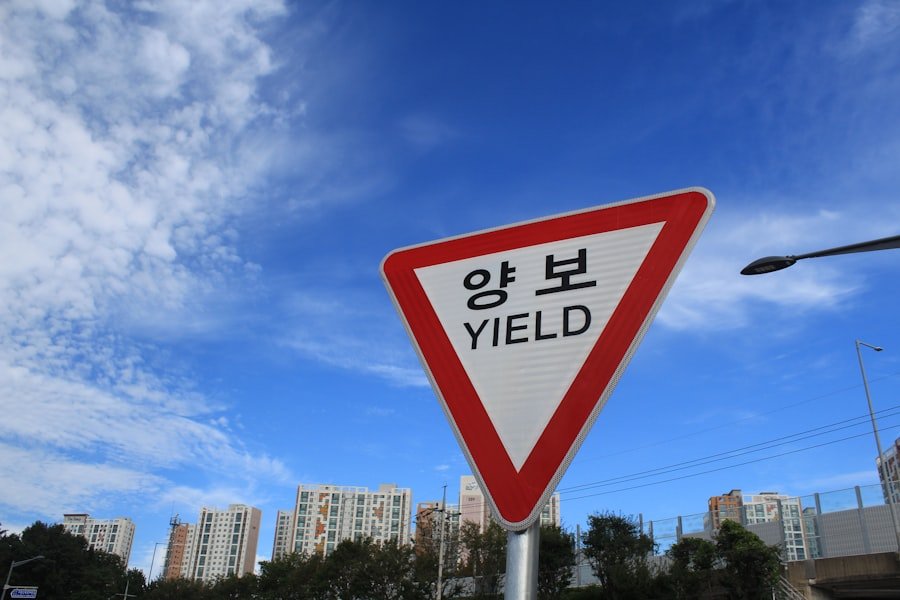
When you ask someone “어디에요?”, it is helpful to be prepared for various responses that may come your way. Locals may provide directions using landmarks or street names that may not be familiar to you. A common response might be “저기요” (jeogiyo), meaning “Over there,” accompanied by a gesture pointing in the direction of the location you seek.
Understanding these cues will help you follow their instructions more effectively. Another common response could include specific directions such as “왼쪽으로 가세요” (oenjjogeuro gaseyo), meaning “Go left.” It is essential to pay attention to these instructions and try to visualise them in relation to your current position. Additionally, locals may use terms like “직진” (jikjin), meaning “go straight,” which can further clarify their directions.
Familiarising yourself with these common responses will enhance your ability to navigate effectively while in Korea.
Key Vocabulary for Understanding Directions in Korean
To navigate effectively in Korea, it is beneficial to familiarise yourself with key vocabulary related to directions. Terms such as “왼쪽” (oenjjok) meaning “left,” “오른쪽” (oreunjjok) meaning “right,” and “직진” (jikjin) meaning “straight” are fundamental when following directions. Additionally, knowing words like “사거리” (sageori) for “intersection” and “신호등” (sinhodeung) for “traffic light” will provide context when locals give directions.
Furthermore, understanding terms related to distances can also be advantageous. Words like “가깝다” (gakkapda) meaning “close,” and “멀다” (meolda) meaning “far,” will help you gauge how far away your destination might be. By building a solid vocabulary base related to directions, you will feel more confident when navigating through Korean cities.
Non-verbal Communication in Asking for Directions in Korea
In addition to verbal communication, non-verbal cues play a significant role in asking for directions in Korea. Gestures such as pointing or mimicking actions can enhance understanding when language barriers exist. For instance, if you are unsure about how far away a location is, using hand signals to indicate distance can help convey your question more effectively.
Moreover, facial expressions and body language can also communicate your intentions. A friendly smile or nod can create a welcoming atmosphere and encourage locals to assist you further. Being aware of these non-verbal cues will not only aid in your navigation but also foster positive interactions with those around you.
Tips for Understanding and Following Directions in Korean
When receiving directions from locals, it is essential to remain attentive and engaged. If you find yourself struggling to comprehend their instructions, do not hesitate to ask them to repeat or clarify their response. Phrases like “다시 한 번 말씀해 주세요” (dasi han beon malsseumhae juseyo), meaning “Please say it again,” can be invaluable in ensuring that you fully understand the directions given.
Additionally, taking notes or using a translation app on your phone can be helpful when trying to remember specific street names or landmarks mentioned during the conversation. Visual aids such as maps or GPS applications can also assist in following directions accurately. By employing these strategies, you will enhance your ability to navigate effectively while exploring Korea.
Cultural Considerations When Asking for Directions in Korea
Cultural norms play a significant role in how interactions unfold when asking for directions in Korea. It is customary to greet individuals politely before posing your question; a simple “안녕하세요” (annyeonghaseyo), meaning “Hello,” sets a positive tone for the interaction. Additionally, showing gratitude after receiving assistance is crucial; phrases like “감사합니다” (gamsahamnida), meaning “Thank you,” demonstrate respect and appreciation.
Furthermore, it is important to be mindful of personal space and body language during these interactions. Koreans may prefer maintaining a certain distance while conversing; therefore, being respectful of this boundary will contribute positively to your experience. Understanding these cultural nuances will not only enhance your ability to ask for directions but also enrich your overall experience while travelling in Korea.
Practice Exercises for Asking for Directions in Korean
To solidify your understanding of asking for directions in Korean, engaging in practice exercises can be immensely beneficial. One effective exercise involves role-playing scenarios where one person acts as a tourist seeking directions while another plays the role of a local resident. This interactive approach allows participants to practice using phrases like “어디에요?” and responding appropriately.
Another useful exercise involves creating flashcards with key vocabulary related to directions and common phrases used when asking for help. Regularly reviewing these flashcards will reinforce your memory and improve your confidence when navigating through Korean cities. For those eager to learn more about the Korean language and culture, consider enrolling in courses at the NLS Norwegian Language School in Oslo.
Their comprehensive Korean courses cater to various proficiency levels and provide an excellent opportunity to deepen your understanding of the language while honing practical skills like asking for directions. With experienced instructors and engaging materials, NLS offers an enriching environment that fosters language acquisition and cultural appreciation. In conclusion, mastering the art of asking for directions in Korean not only enhances your travel experience but also opens doors to meaningful interactions with locals.
By familiarising yourself with essential phrases, understanding cultural nuances, and practising regularly, you will navigate Korea with confidence and ease. Whether you’re exploring bustling cities or tranquil countryside villages, knowing how to ask for directions will undoubtedly enrich your journey through this vibrant country.
Register for a Korean class at the NLS Norwegian Language School now!




