

Dante Alighieri’s “Divine Comedy” stands as one of the most significant literary works in the history of Western literature. Written in the early 14th century, this epic poem not only serves as a profound exploration of the human condition but also offers a rich tapestry of theological, philosophical, and political themes. The narrative unfolds through three distinct realms: Inferno, Purgatorio, and Paradiso, each representing different aspects of the afterlife according to medieval Christian beliefs.
Dante’s journey through these realms is not merely a personal odyssey; it is also a reflection of the moral and ethical dilemmas faced by humanity. The “Divine Comedy” is remarkable not only for its content but also for its linguistic innovation. Dante chose to write in the vernacular Italian rather than Latin, which was the dominant literary language of his time.
This decision was revolutionary, as it made literature accessible to a broader audience and laid the groundwork for the development of the Italian language. As readers delve into Dante’s work, they encounter a complex interplay of language, culture, and history that enriches their understanding of both the text and its author. Ready to speak Italian? Enroll for Italian classes at the NLS Norwegian Language School in Oslo!
Summary
- Dante’s Divine Comedy is a masterpiece of Italian literature, and understanding the language and grammar of his time is crucial for a deeper appreciation of his work.
- Italian in Dante’s time had different grammar rules and syntax compared to modern Italian, making it essential to grasp the historical context to fully comprehend his writing.
- Italian grammar plays a significant role in unlocking the complexities of Dante’s work, as it influences the structure and meaning of his sentences.
- Navigating Dante’s complex syntax requires careful attention to the arrangement of words and phrases, as well as an understanding of the poetic devices he employs.
- Dante’s use of verb tenses is a key aspect of his writing, and deciphering them is essential for grasping the nuances of his storytelling and character development.
Understanding the Italian Language in Dante’s Time
To fully appreciate Dante’s “Divine Comedy,” one must first understand the linguistic landscape of Italy during the 14th century. At that time, Italy was not a unified nation but a collection of city-states, each with its own dialects and linguistic traditions. The Italian language was still in its infancy, evolving from Latin and influenced by various regional dialects.
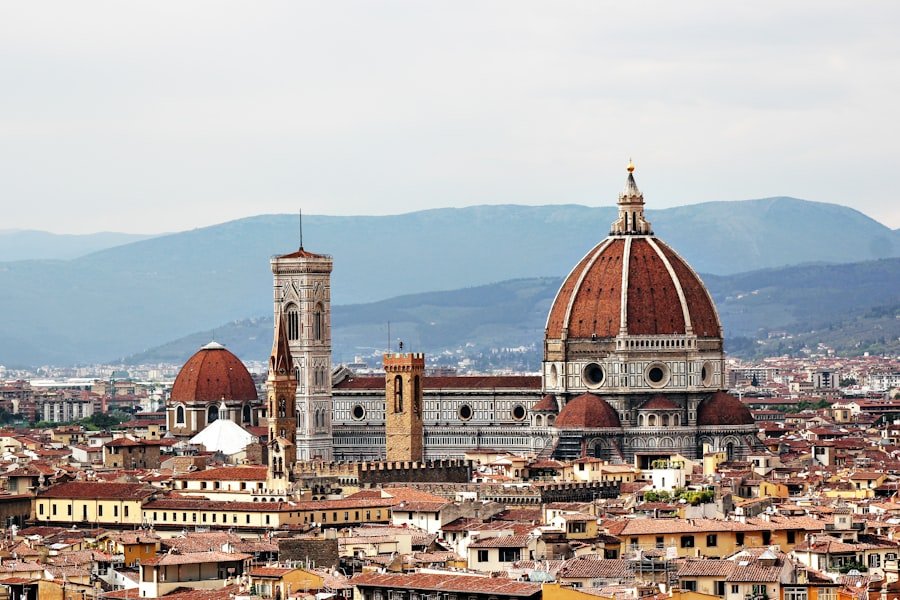
This linguistic diversity posed both challenges and opportunities for writers like Dante, who sought to create a cohesive literary language that could resonate with a wide audience. Dante’s choice to write in the Tuscan dialect was strategic; he believed that this dialect, spoken in Florence, was the most refined and suitable for literary expression. By elevating Tuscan to a national language, Dante not only asserted his cultural identity but also set a precedent for future writers.
His work became a cornerstone for the standardisation of Italian, influencing generations of poets and authors who followed. Understanding this historical context is crucial for readers who wish to grasp the nuances of Dante’s language and its significance in shaping modern Italian.
The Importance of Italian Grammar in Reading Dante

Italian grammar plays a pivotal role in unlocking the layers of meaning within Dante’s “Divine Comedy.” The structure of Italian sentences, including subject-verb agreement and noun-adjective concordance, is essential for comprehending the text accurately. For instance, understanding how verbs conjugate according to tense and subject can illuminate the temporal aspects of Dante’s narrative. The subtleties of grammar not only affect the clarity of individual lines but also contribute to the overall rhythm and flow of the poem.
Moreover, Dante’s use of grammatical structures often reflects his thematic concerns. For example, his frequent use of the subjunctive mood can convey uncertainty or desire, mirroring the moral complexities faced by his characters. By paying close attention to grammar, readers can gain insights into Dante’s intentions and the emotional weight behind his words.
Thus, a solid grasp of Italian grammar is indispensable for anyone seeking to engage deeply with this monumental work.
Navigating Dante’s Complex Syntax
Dante’s syntax is characterised by its complexity and sophistication, which can pose challenges for modern readers. His sentences often feature intricate clauses and varied word order, reflecting both his poetic style and the rhetorical traditions of his time. Navigating this complexity requires patience and careful analysis, as each sentence can contain multiple layers of meaning that contribute to the overarching narrative.
One notable aspect of Dante’s syntax is his frequent use of enjambment, where a sentence flows beyond the confines of a single line. This technique creates a sense of continuity and urgency, drawing readers into the unfolding drama of his journey through the afterlife. Additionally, Dante often employs rhetorical devices such as anaphora and parallelism, which enhance the musicality of his verse while reinforcing key themes.
By becoming adept at recognising these syntactical features, readers can appreciate the artistry of Dante’s writing and its impact on their interpretation of the text.
Unravelling Dante’s Use of Verb Tenses
The use of verb tenses in Dante’s “Divine Comedy” is a crucial element that shapes both narrative structure and character development. Dante employs various tenses—present, past, and future—to convey different temporal perspectives throughout his journey. For instance, the use of the present tense can create immediacy and intimacy, allowing readers to experience events alongside Dante as he traverses through Hell, Purgatory, and Heaven.
Conversely, past tenses often evoke reflection and memory, as Dante recounts his experiences and encounters with historical figures. This interplay between tenses not only enriches the narrative but also underscores the themes of redemption and transformation that permeate the poem. By analysing Dante’s verb tenses, readers can gain a deeper understanding of how time functions within the “Divine Comedy” and how it influences their perception of Dante’s spiritual evolution.
Deciphering Dante’s Vocabulary and Word Order
Dante’s choice of vocabulary is both deliberate and evocative, reflecting his intellectual depth and cultural context. His lexicon encompasses a wide range of terms—from everyday language to specialised theological concepts—allowing him to articulate complex ideas with precision. Understanding this vocabulary is essential for readers who wish to grasp the full significance of his work.
Additionally, Dante’s word order often deviates from contemporary norms, which can lead to confusion for modern readers. He frequently places adjectives after nouns or employs unusual syntactical arrangements for poetic effect. This flexibility allows him to emphasise certain ideas or create specific rhythms within his verses.
By familiarising themselves with Dante’s vocabulary and word order, readers can unlock new interpretations and appreciate the richness of his language.
Recognising Italian Dialects and Regional Variations in Dante’s Work
While Dante primarily wrote in Tuscan Italian, his work is imbued with references to various Italian dialects and regional variations that reflect the linguistic diversity of his time. This interplay between dialects adds depth to his characters and settings, grounding them in specific cultural contexts. For instance, when Dante encounters figures from different regions in Hell or Purgatory, their speech may reflect their local dialects or idiosyncrasies.
Recognising these dialectal influences can enhance readers’ understanding of character motivations and social dynamics within the poem. Furthermore, it highlights Dante’s role as a unifier of language; by incorporating elements from various dialects into his work, he acknowledges Italy’s rich linguistic heritage while simultaneously advocating for a standardised Italian language. This aspect of his writing invites readers to consider how language shapes identity and community.
Exploring the Influence of Latin on Dante’s Writing
Latin serves as a foundational element in Dante’s “Divine Comedy,” influencing both its thematic content and linguistic structure. As a scholar well-versed in classical literature and philosophy, Dante draws upon Latin texts to enrich his narrative with references to ancient authors such as Virgil and Ovid. These allusions not only demonstrate his intellectual prowess but also establish connections between classical thought and Christian theology.
Moreover, Latin grammar and vocabulary permeate Dante’s writing, providing a framework that enhances his poetic expression. The interplay between Latin and vernacular Italian reflects the transitional nature of language during this period; while Latin represented scholarly authority, vernacular Italian emerged as a vehicle for popular expression. By examining this influence, readers can appreciate how Dante navigated these linguistic currents to create a work that resonates across time and culture.
Analysing Dante’s Use of Pronouns and Prepositions
Dante’s strategic use of pronouns and prepositions adds layers of meaning to his verses while contributing to their rhythmic quality. Pronouns often serve to establish relationships between characters or ideas, guiding readers through complex interactions within the narrative. For instance, the use of first-person pronouns allows readers to connect intimately with Dante as he recounts his journey, while third-person pronouns may distance characters from their actions or fates.
Prepositions also play a vital role in shaping spatial relationships within the poem. They help delineate movement through different realms—whether ascending towards Heaven or descending into Hell—while also conveying emotional states or moral positions. By analysing these grammatical elements, readers can uncover deeper insights into character dynamics and thematic concerns that underpin Dante’s work.
Examining the Role of Italian Syntax in Dante’s Poetic Style
The syntax employed by Dante is integral to his poetic style, contributing to both its aesthetic appeal and emotional resonance. His ability to manipulate sentence structure allows him to create varied rhythms that enhance the musicality of his verses. For example, he often employs short, impactful sentences during moments of tension or revelation, while longer sentences may be used to convey complex ideas or elaborate descriptions.
Additionally, Dante’s syntax reflects his philosophical inquiries into existence and morality. The way he constructs sentences can mirror the intricacies of human experience—capturing moments of clarity amidst confusion or despair. By examining how syntax functions within his poetry, readers can gain insight into how form complements content in conveying profound truths about life and faith.
Enhancing the Reading Experience of Dante’s Divine Comedy through Italian Grammar
In conclusion, engaging with Dante Alighieri’s “Divine Comedy” requires more than mere familiarity with its narrative; it demands an understanding of the intricate linguistic elements that underpin its brilliance. From grammar to syntax, verb tenses to vocabulary choices—each aspect contributes significantly to how readers interpret this monumental work. By delving into these linguistic intricacies, one can unlock deeper meanings within Dante’s text while appreciating its poetic artistry.
For those eager to explore these themes further while enhancing their command of Italian language skills, enrolling in Italian courses at NLS Norwegian Language School in Oslo presents an excellent opportunity. The school offers tailored programmes designed to immerse students in both language acquisition and cultural understanding—perfectly aligning with those who wish to delve into literary masterpieces like Dante’s “Divine Comedy.” Through structured lessons that emphasise grammar, vocabulary, syntax analysis—and even dialectal variations—students will find themselves well-equipped not only to read but also to appreciate one of literature’s greatest works on a profound level.
Ready to speak Italian? Enroll for Italian classes at the NLS Norwegian Language School in Oslo!




