


Navigating a new city can be a daunting task, especially when the language spoken is unfamiliar. In South Korea, where the streets are bustling with life and the culture is rich, knowing how to give and receive directions in Korean can significantly enhance your experience. The ability to communicate effectively in this regard not only helps you find your way but also opens doors to engaging with locals, discovering hidden gems, and immersing yourself in the vibrant atmosphere of Korean cities.
Understanding the nuances of giving and receiving directions in Korean involves more than just memorising phrases; it requires an appreciation of the cultural context and the social dynamics at play. Koreans are known for their hospitality, and they often go out of their way to assist someone in need. Therefore, learning how to ask for directions politely and understanding the common responses can make your interactions more meaningful.
This article will guide you through essential phrases, vocabulary, and cultural considerations that will equip you with the skills needed to navigate the streets of Korea confidently. Learn Korean in Oslo! NLS Norwegian Language School is now offering classes. Register today.
Summary
- When giving and receiving directions in Korean, it’s important to understand the basic phrases and common vocabulary used in this context.
- Using landmarks and street names is crucial for giving and receiving directions in Korean, so it’s important to familiarise yourself with them.
- Understanding the Korean map and transportation systems will greatly help in navigating and following directions in Korea.
- Polite and formal language is essential when giving and receiving directions in Korean, so be mindful of using the appropriate language.
- When in doubt, don’t hesitate to ask for help and clarify directions in Korean, and be open to using gestures and nonverbal communication to aid in understanding.
Basic Phrases for Asking for Directions in Korean
When you find yourself in need of directions, having a few basic phrases at your disposal can make all the difference. One of the most fundamental phrases is “저기요, 길을 물어봐도 될까요?” (Jeogiyo, gireul mureobwado doelkkayo?), which translates to “Excuse me, may I ask for directions?” This polite inquiry sets a respectful tone and indicates your willingness to engage with the person you are addressing. Another useful phrase is “어디에요?” (Eodieyo?), meaning “Where is it?” This simple question can be used in various contexts, whether you are looking for a specific location or trying to find your way to a general area.
Additionally, you might want to ask, “이곳에 가려면 어떻게 가야 하나요?” (Igose garyeomyeon eotteoke gaya hanayo?), which means “How do I get to this place?” These phrases serve as a solid foundation for initiating conversations about directions and can help you feel more confident when navigating unfamiliar surroundings.
Common Vocabulary for Giving Directions in Korean
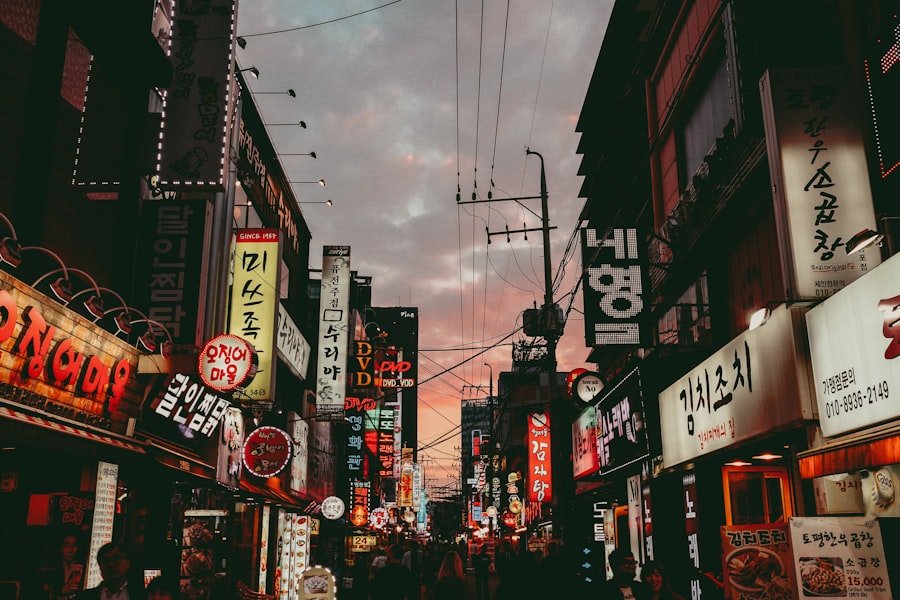
To effectively communicate directions, it is essential to familiarise yourself with common vocabulary related to navigation. Terms such as “왼쪽” (oenjjok) for “left,” “오른쪽” (oreunjjok) for “right,” and “직진” (jikjin) for “straight ahead” are crucial when providing or receiving directions. These words form the backbone of directional communication and are often used in conjunction with other phrases to create clear instructions.
Moreover, understanding terms related to distance can also be beneficial. For instance, “멀리” (meolli) means “far,” while “가까이” (gakkai) translates to “near.” When combined with directional phrases, these words can help clarify how far one must travel to reach their destination. For example, “왼쪽으로 가면 가까이에 있어요” (Oenjjogeuro gamyeon gakkai-e isseoyo) means “If you go left, it is nearby.” Mastering this vocabulary will empower you to navigate conversations about directions with greater ease.
Using Landmarks and Street Names in Korean
In Korea, landmarks play a significant role in giving directions. Locals often refer to well-known buildings, parks, or statues when guiding someone. Familiarising yourself with prominent landmarks in the area you are exploring can enhance your ability to understand and follow directions.
For instance, if someone says, “서울역을 지나서 오른쪽으로 가세요” (Seoulyeogeul jinaseo oreunjjogeuro gaseyo), meaning “Go right after passing Seoul Station,” recognising that landmark will help you visualise your route. Street names are also an integral part of navigation in Korea. Many streets have unique names that may not be immediately intuitive for non-Korean speakers.
However, learning a few key street names can aid in your understanding of directions. For example, “명동” (Myeongdong) is a popular shopping district, while “홍대” (Hongdae) is known for its vibrant nightlife. When asking for directions, incorporating these names into your questions can provide clarity and context, making it easier for locals to assist you.
Understanding Korean Map and Transportation Systems
Navigating through Korea often involves using maps and public transportation systems. Familiarising yourself with how maps are structured in Korea can significantly improve your directional skills. Most maps will display landmarks, street names, and public transport routes clearly, but they may also include symbols that represent different types of transport such as buses and subways.
The Korean transportation system is renowned for its efficiency and reliability. The subway system, in particular, is extensive and user-friendly, with signs available in both Korean and English. Understanding how to read subway maps and schedules will enable you to plan your journeys effectively.
For instance, knowing that “지하철” (jihacheol) means “subway” can help you ask questions like “지하철역이 어디에요?” (Jihacheollyeogi eodieyo?), meaning “Where is the subway station?” This knowledge will empower you to navigate the city with confidence.
Polite and Formal Language for Giving and Receiving Directions in Korean
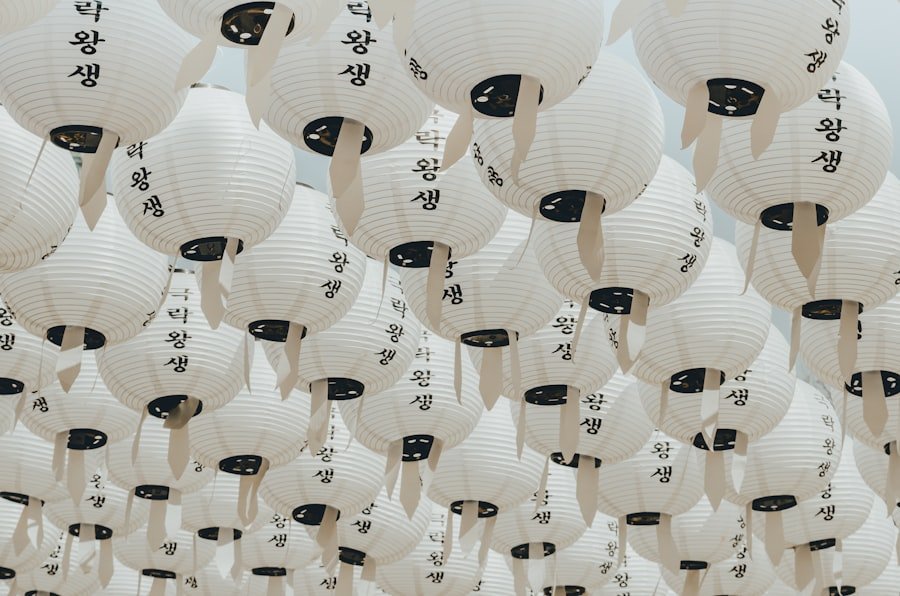
Korean culture places a strong emphasis on politeness and respect, particularly when interacting with strangers. Therefore, using formal language when asking for or giving directions is essential. The use of polite endings such as “-요” (-yo) at the end of sentences conveys respect and consideration towards the listener.
For example, instead of simply saying “가세요” (gaseyo), which means “go,” adding a polite prefix like “부탁드립니다” (butakdeurimnida), meaning “I kindly ask you,” transforms the phrase into a more respectful request: “부탁드립니다, 오른쪽으로 가세요” (Butakdeurimnida, oreunjjogeuro gaseyo) translates to “Please go right.” This level of politeness not only reflects well on you as a visitor but also fosters positive interactions with locals who appreciate your effort to communicate respectfully.
Clarifying Directions and Asking for Help in Korean
Even with the best intentions and preparation, there may be times when directions become unclear or confusing. In such instances, knowing how to clarify or ask for further assistance is crucial. Phrases like “다시 한 번 말씀해 주실 수 있나요?” (Dasi han beon malsseumhae jusil su innayo?), meaning “Could you please repeat that?” can be invaluable when trying to ensure you understand correctly.
Additionally, if you find yourself lost or uncertain about your route, do not hesitate to ask for help again. You might say, “죄송하지만 길을 잃어버렸어요” (Joesonghajiman gireul ilh-eobeoryeosseoyo), which translates to “I’m sorry, but I’ve lost my way.” This expression not only conveys your predicament but also invites assistance from those around you who may be willing to help guide you back on track.
Using Gestures and Nonverbal Communication in Korean Directions
In situations where language barriers may hinder communication, gestures and nonverbal cues can be incredibly effective tools for conveying directions. Koreans often use hand signals or point towards landmarks when giving directions. For instance, pointing left or right while saying the corresponding directional words can reinforce understanding.
Moreover, facial expressions play a significant role in communication as well. A friendly smile or nod can create a welcoming atmosphere that encourages interaction. If you find yourself struggling with verbal communication, don’t hesitate to use gestures alongside your spoken words; this combination can bridge gaps in understanding and facilitate clearer exchanges.
Tips for Navigating and Following Directions in Korean
When navigating through Korea using directions given by locals or maps, there are several tips that can enhance your experience. Firstly, always carry a small notebook or use your smartphone to jot down important phrases or landmarks that may come up during conversations about directions. This practice allows you to refer back to them later if needed.
Secondly, consider downloading navigation apps that support both English and Korean languages. These apps often provide real-time directions and can help you stay oriented while exploring new areas. Additionally, if you’re using public transport, familiarise yourself with the schedules and routes beforehand; this preparation will make it easier to follow directions given by locals.
Cultural Considerations when Giving and Receiving Directions in Korean
Understanding cultural nuances is vital when giving or receiving directions in Korea. Koreans value politeness and respect in their interactions; therefore, maintaining a courteous demeanour is essential. When asking for directions, it is customary to bow slightly as a sign of respect while making your request.
Furthermore, be mindful of personal space when engaging with locals; Koreans may prefer a certain distance during conversations. If someone offers assistance by walking with you or guiding you verbally, it is polite to express gratitude by saying “감사합니다” (Gamsahamnida), meaning “Thank you.” Such gestures foster goodwill and create positive interactions during your travels.
Practice Exercises for Improving Korean Directional Skills
To solidify your understanding of giving and receiving directions in Korean, engaging in practice exercises can be immensely beneficial. One effective exercise involves role-playing scenarios where one person acts as a tourist asking for directions while another plays the role of a local providing guidance. This interactive approach allows participants to practise vocabulary and phrases in a realistic context.
Another useful exercise is creating flashcards with common directional phrases on one side and their meanings on the other. Regularly reviewing these cards will reinforce your memory and help you recall essential vocabulary when needed. Additionally, consider exploring online resources or language exchange platforms where you can converse with native speakers; this exposure will further enhance your confidence in navigating conversations about directions.
In conclusion, mastering the art of giving and receiving directions in Korean is an invaluable skill that enriches your travel experience in South Korea. By familiarising yourself with basic phrases, common vocabulary, cultural considerations, and practical exercises, you’ll be well-equipped to navigate the vibrant streets of Korea confidently. For those interested in delving deeper into the Korean language and culture, consider enrolling in Korean courses at the NLS Norwegian Language School in Oslo.
Their comprehensive curriculum offers tailored lessons that cater to various proficiency levels while emphasising conversational skills essential for real-life situations like navigating through cities. With dedicated instructors and an engaging learning environment, NLS provides an excellent opportunity to enhance your language skills while preparing for an unforgettable journey through Korea’s dynamic landscape.




